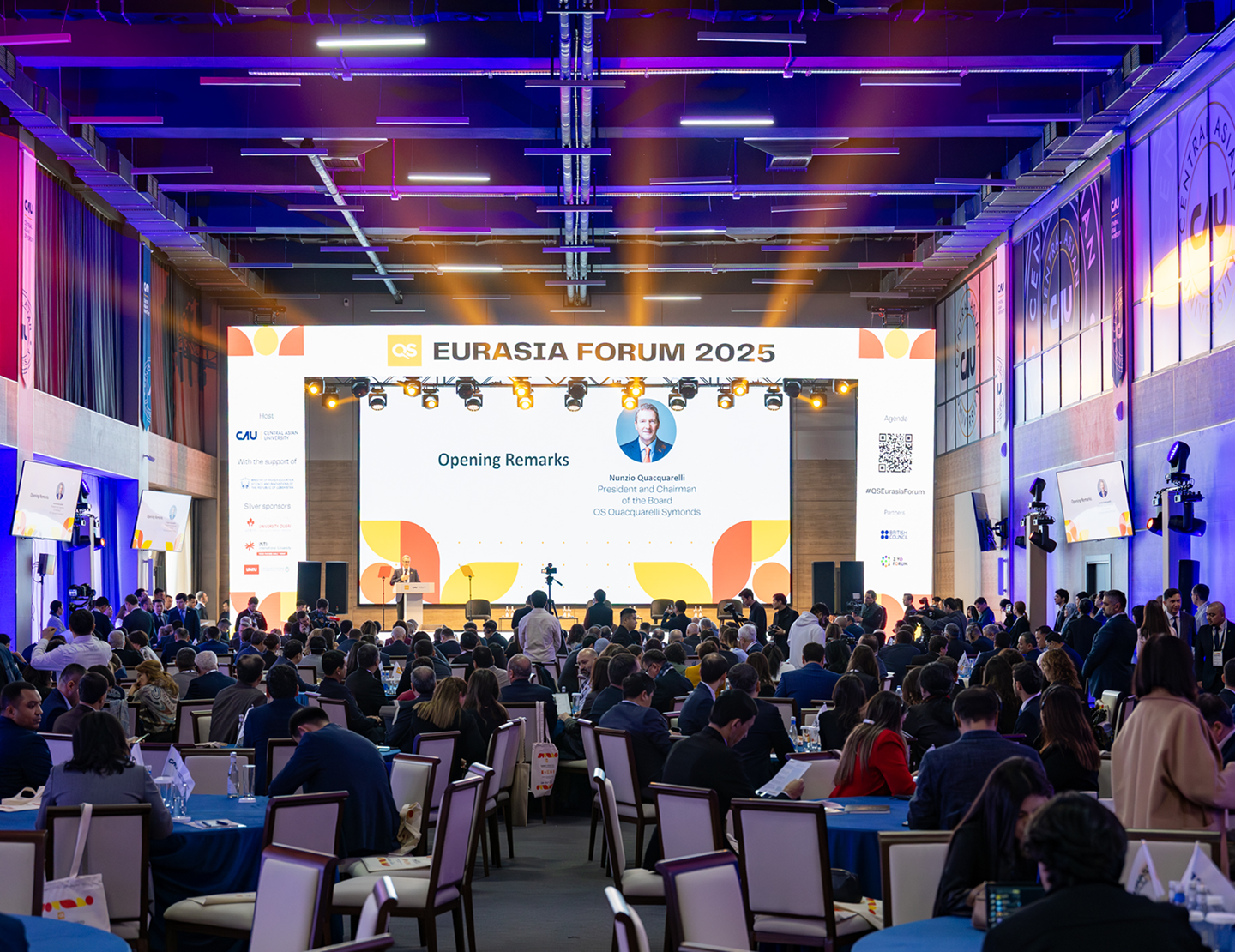
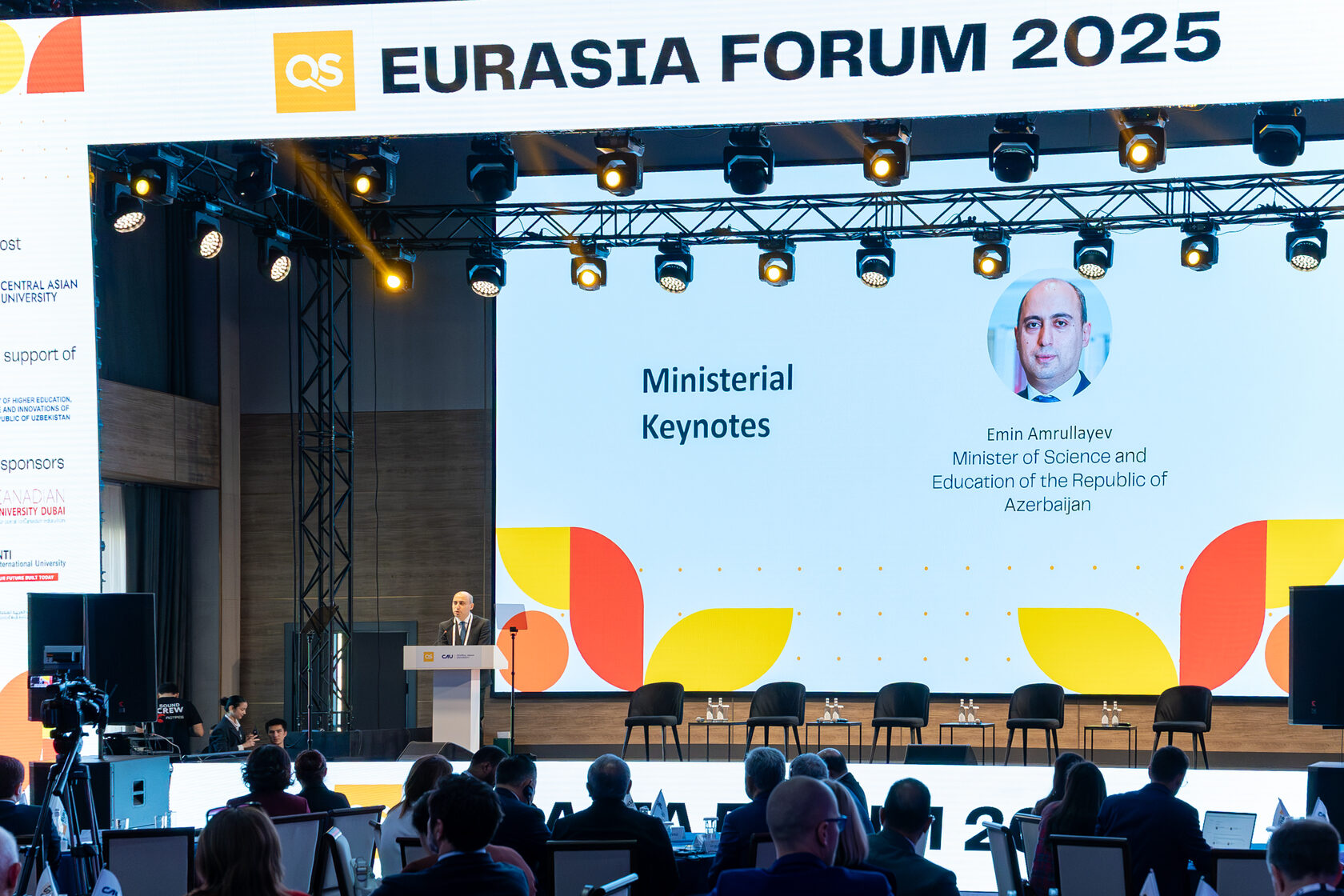
On November 25–26, 2025, Central Asian University in Tashkent hosted the QS Eurasia Forum 2025 — an international event that brought together more than 300 representatives from the global academic community, government bodies, and industry partners.
The forum was organized by QS Quacquarelli Symonds, a global leader in higher education analytics. The host institution was Central Asian University (CAU) — one of Uzbekistan’s leading universities, actively expanding its international academic cooperation.
The central theme of the forum, “Expanding Horizons: Building Global Bridges in Higher Education,” covered strategic discussions on internationalization, global competitiveness, and the transformation of universities in the region.
The central theme of the forum, “Expanding Horizons: Building Global Bridges in Higher Education,” covered strategic discussions on internationalization, global competitiveness, and the transformation of universities in the region.
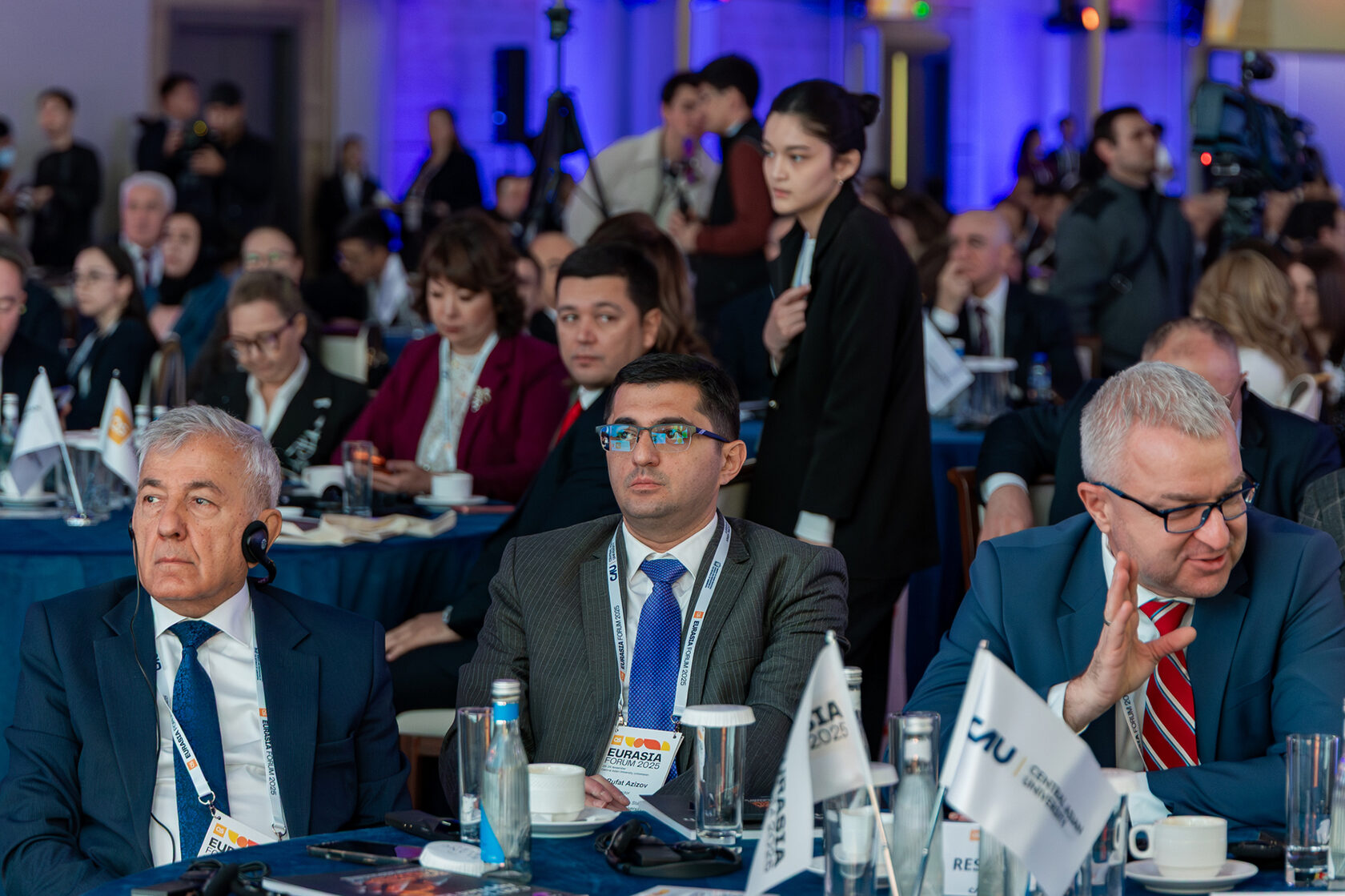
The event was held with the support of the Ministry of Higher Education, Science and Innovation of the Republic of Uzbekistan and gathered delegations from Uzbekistan, Kazakhstan, Kyrgyzstan, Azerbaijan, Türkiye, Hungary, as well as representatives of universities from Europe and the Middle East.
The forum became a key platform for dialogue on the future of Eurasian universities and their role in the global educational ecosystem.
The forum became a key platform for dialogue on the future of Eurasian universities and their role in the global educational ecosystem.
Eurasia as a New Center for Human Capital Growth
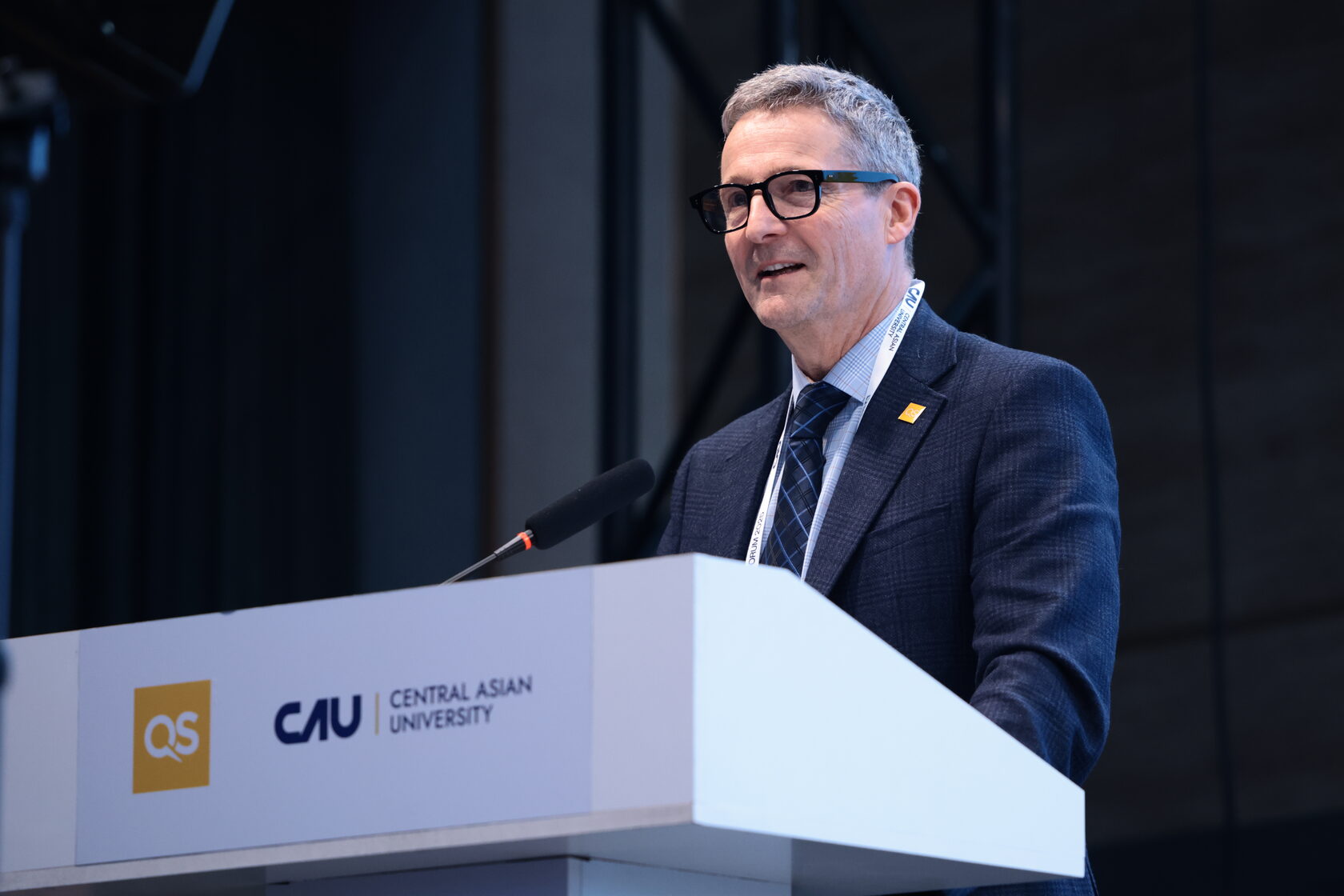
Nunzio Quacquarelli, President and Chairman of QS, emphasized that holding the first forum in Tashkent is an important signal of the region’s growing influence:
“Universities in Central Asia are showing dynamic development: the number of Uzbek institutions represented in QS rankings has grown from two to nine in just a few years. The forum brings together leading universities worldwide and helps strengthen international partnerships, develop research capacity, and prepare students for the jobs of the future.”
Special attention was given to the integration of artificial intelligence in education, sustainable development, joint academic programs, and enhancing the region's attractiveness for international students.
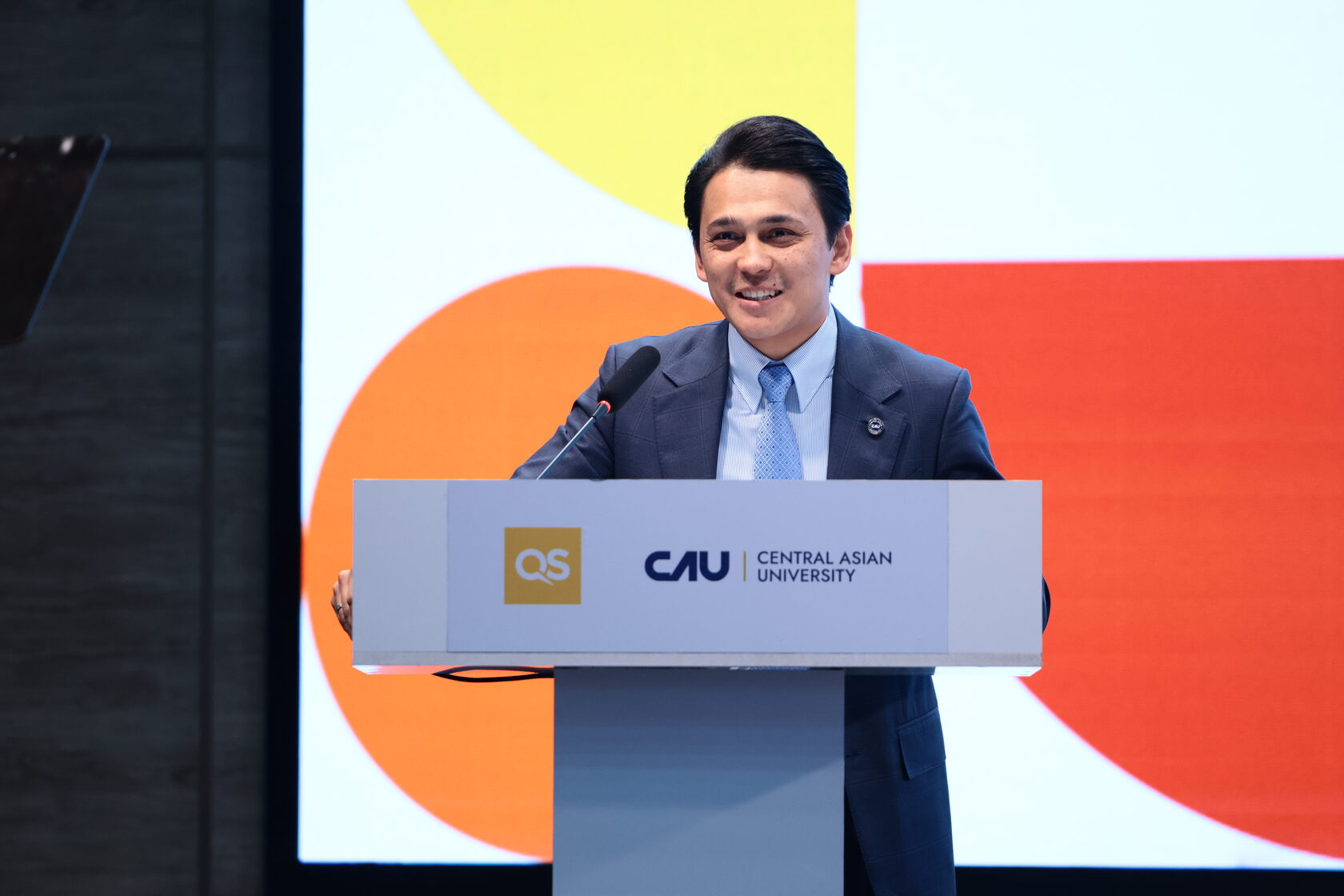
Kamran Gulamov, Rector of Central Asian University, highlighted that hosting the forum at CAU aligns with the university’s mission:
“CAU was established as a regional academic platform connecting Central Asian countries through education, technological development, and international collaboration. Hosting the first QS Eurasia Forum within CAU reflects the trust of the global academic community and strengthens our university’s position in global dialogue. We discussed the future of higher education, digitalization, new skills, and the formation of sustainable international partnerships. And most importantly — it became clear that Eurasia today is not merely catching up but is able to set its own agenda in global education.”
The university’s infrastructure, digital solutions, and modern spaces for discussions and practical sessions were among the reasons CAU was chosen as the host venue.
“CAU was established as a regional academic platform connecting Central Asian countries through education, technological development, and international collaboration. Hosting the first QS Eurasia Forum within CAU reflects the trust of the global academic community and strengthens our university’s position in global dialogue. We discussed the future of higher education, digitalization, new skills, and the formation of sustainable international partnerships. And most importantly — it became clear that Eurasia today is not merely catching up but is able to set its own agenda in global education.”
The university’s infrastructure, digital solutions, and modern spaces for discussions and practical sessions were among the reasons CAU was chosen as the host venue.
Program Highlights
Key program components included panel discussions on the role of Eurasian higher education as a bridge between East and West, the “Breaking Barriers” session featuring women leaders, a discussion on international cooperation strategies with examples from Uzbekistan, master classes on developing global partnerships, and a hands-on workshop on preparing universities for participation in the QS World University Rankings.
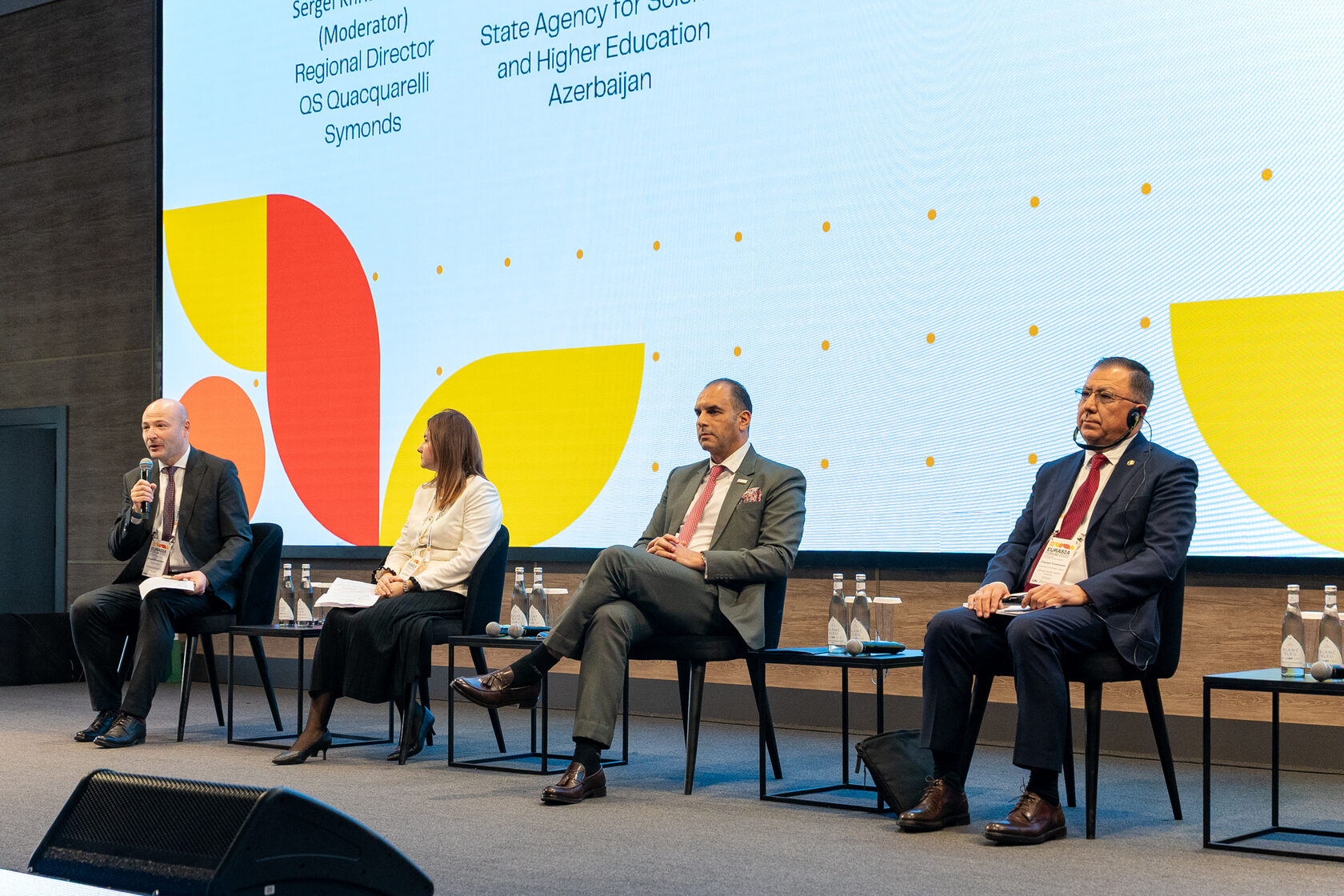
Forum participants noted that Central Asia is becoming one of the most promising regions for human capital development and that universities must coordinate efforts in AI adoption, diploma recognition, joint program development, and increased academic mobility. A new stage requires strengthening international ties, exchanging best practices, and shaping Eurasia’s own cooperation agenda — not by copying existing models, but by creating unique educational solutions.
As part of the forum, a QS Stars and QS World University Rankings Awards ceremony was held to honor universities that have made significant contributions to education and achieved international recognition.
QS Eurasia Forum 2025 became a landmark academic event for the region, bringing together leading experts and higher education leaders.
About QS Quacquarelli Symonds
QS Quacquarelli Symonds is a leading global provider of analytics, services, and insights in higher education. The company’s mission is to help people around the world realize their potential through education, international mobility, and career development. QS uses a unique data-driven approach based on billions of interactions between students, the academic community, and employers worldwide.