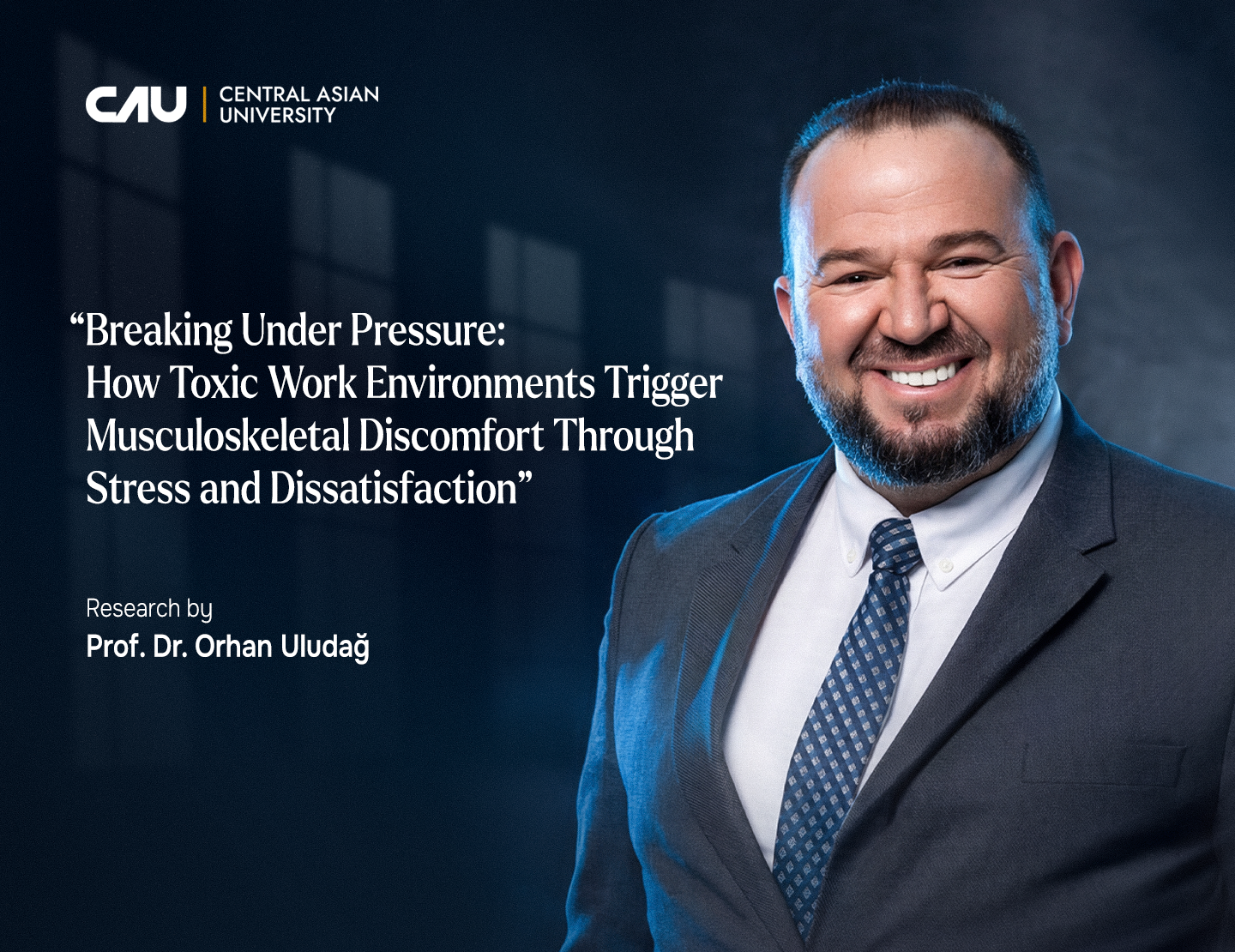
A new academic study examining the impact of toxic work environments on employee health has been published in the international peer-reviewed journal Administrative Sciences (MDPI), Volume 16, Issue 2.
The article, titled “Breaking Under Pressure: How Toxic Work Environments Trigger Musculoskeletal Discomfort Through Stress and Dissatisfaction,” was authored by Prof. Dr. Orhan Uludağ and his colleagues.
The study explores how negative workplace conditions can influence not only employee morale and satisfaction, but also physical well-being. The authors highlight the role of chronic stress and job dissatisfaction as key factors that may contribute to musculoskeletal discomfort, emphasizing the connection between psychological strain and physical symptoms.
By combining perspectives from organizational research and occupational health, the publication offers insights that may be valuable for both academic researchers and organizations aiming to improve workplace culture and employee support systems.
The findings contribute to ongoing international discussions on sustainable work environments and employee well-being, underlining the importance of organizational practices that promote healthier working conditions.
Link
The article, titled “Breaking Under Pressure: How Toxic Work Environments Trigger Musculoskeletal Discomfort Through Stress and Dissatisfaction,” was authored by Prof. Dr. Orhan Uludağ and his colleagues.
The study explores how negative workplace conditions can influence not only employee morale and satisfaction, but also physical well-being. The authors highlight the role of chronic stress and job dissatisfaction as key factors that may contribute to musculoskeletal discomfort, emphasizing the connection between psychological strain and physical symptoms.
By combining perspectives from organizational research and occupational health, the publication offers insights that may be valuable for both academic researchers and organizations aiming to improve workplace culture and employee support systems.
The findings contribute to ongoing international discussions on sustainable work environments and employee well-being, underlining the importance of organizational practices that promote healthier working conditions.
Link