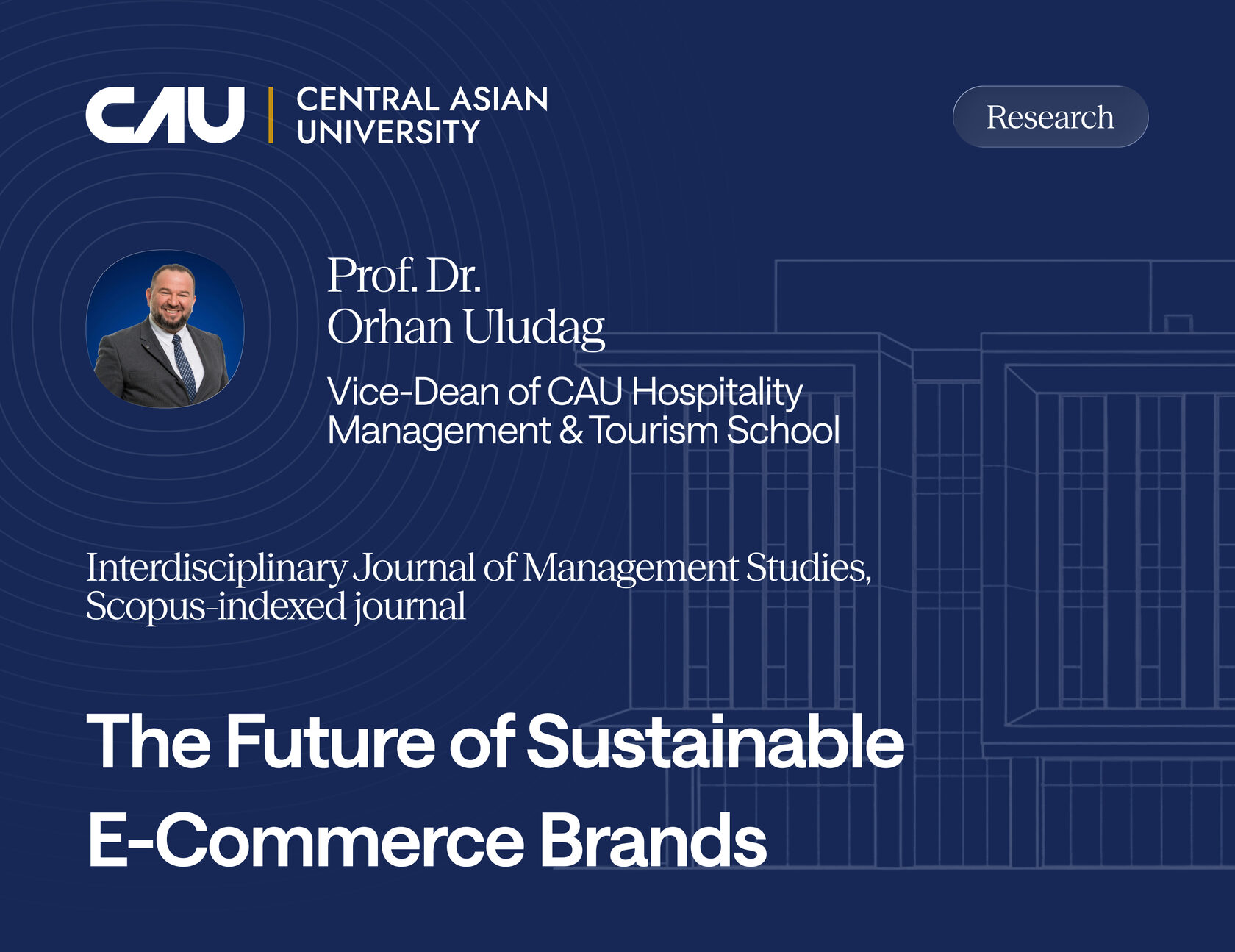
What helps e-commerce brands build lasting relationships with customers in an increasingly competitive digital marketplace? A study co-authored by Prof. Dr. Orhan Uludag of Central Asian University (CAU) explores the factors that contribute to brand sustainability in the digital environment.
Titled “Investigating Determinants of Brand Sustainability in Malaysian E-Commerce: A PLS-SEM Approach,” the research examines the roles of brand awareness, brand identity, brand anthropomorphism, customer engagement, and digital self-efficacy in shaping sustainable e-commerce brands.
Using Partial Least Squares Structural Equation Modeling (PLS-SEM), the researchers found that brand identity and brand anthropomorphism are significant factors associated with customer engagement and brand sustainability. The study also highlights the role of customer engagement in the relationships between brand-related factors and sustainability, while examining how digital self-efficacy influences the connection between customer engagement and sustainable brand development.
The findings offer insights for e-commerce businesses seeking to build brands that go beyond visibility. A distinctive brand identity, a more human-centered brand experience, and meaningful customer interactions may all contribute to stronger customer relationships and long-term brand sustainability.
The article has been published in the Interdisciplinary Journal of Management Studies, a Scopus-indexed journal.
Read the full article