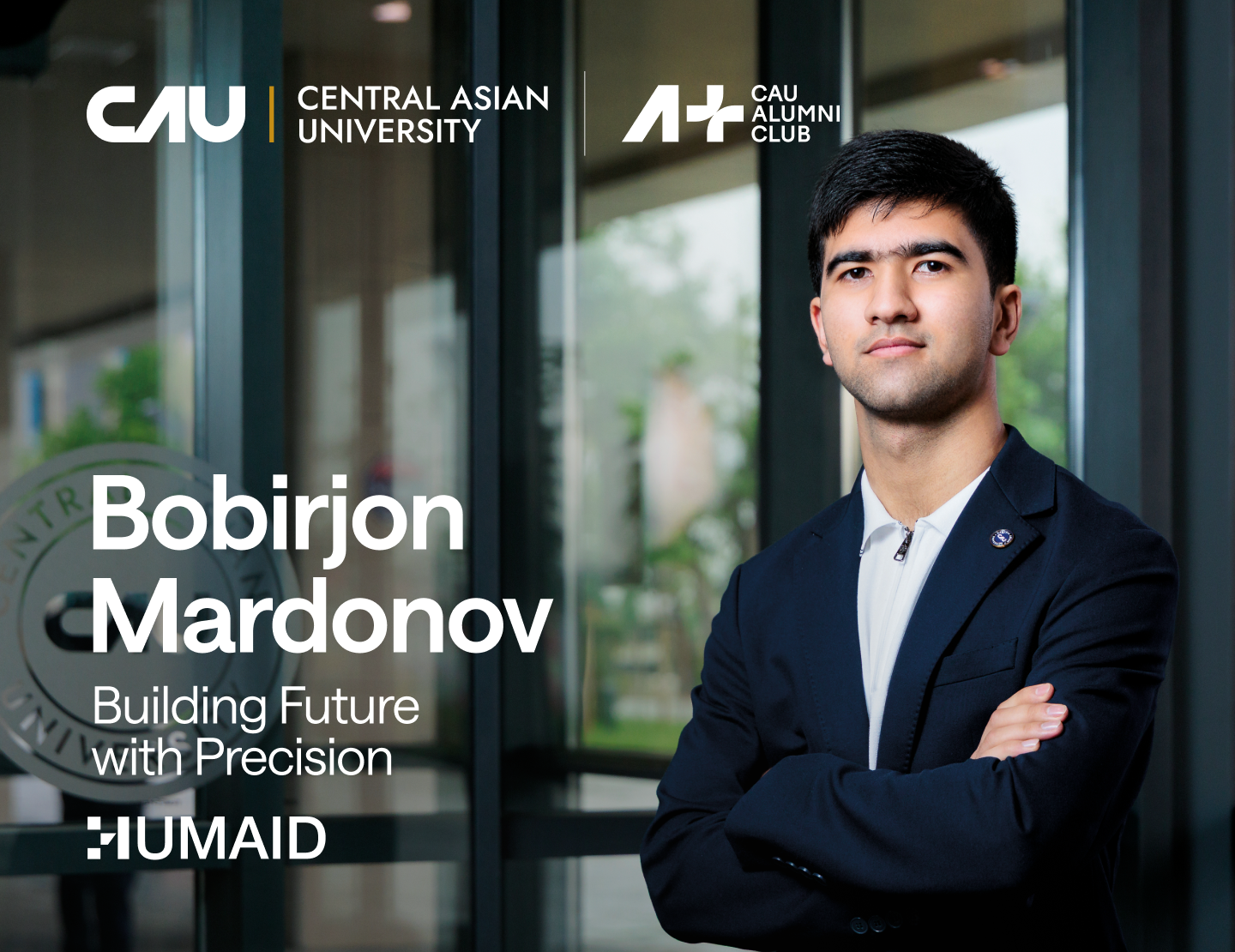
For Central Asian University engineering alumnus Bobirjon Mardonov, the decision to pursue a career in technology began long before university. Like many students, he started thinking seriously about higher education during middle school, but unlike most of his peers, he already understood that language and education could shape the scale of his future opportunities.
Drawn to engineering and computer science from an early age, Bobirjon began learning English while still in school, believing that studying in an English-speaking academic environment would give him access to a broader, more international perspective. Since studying abroad was financially out of reach, he focused on finding a university in Uzbekistan that could offer both strong academic standards and global opportunities. According to him, CAU stood out not only because of its curriculum and modern facilities, but because of the vision behind the university itself.
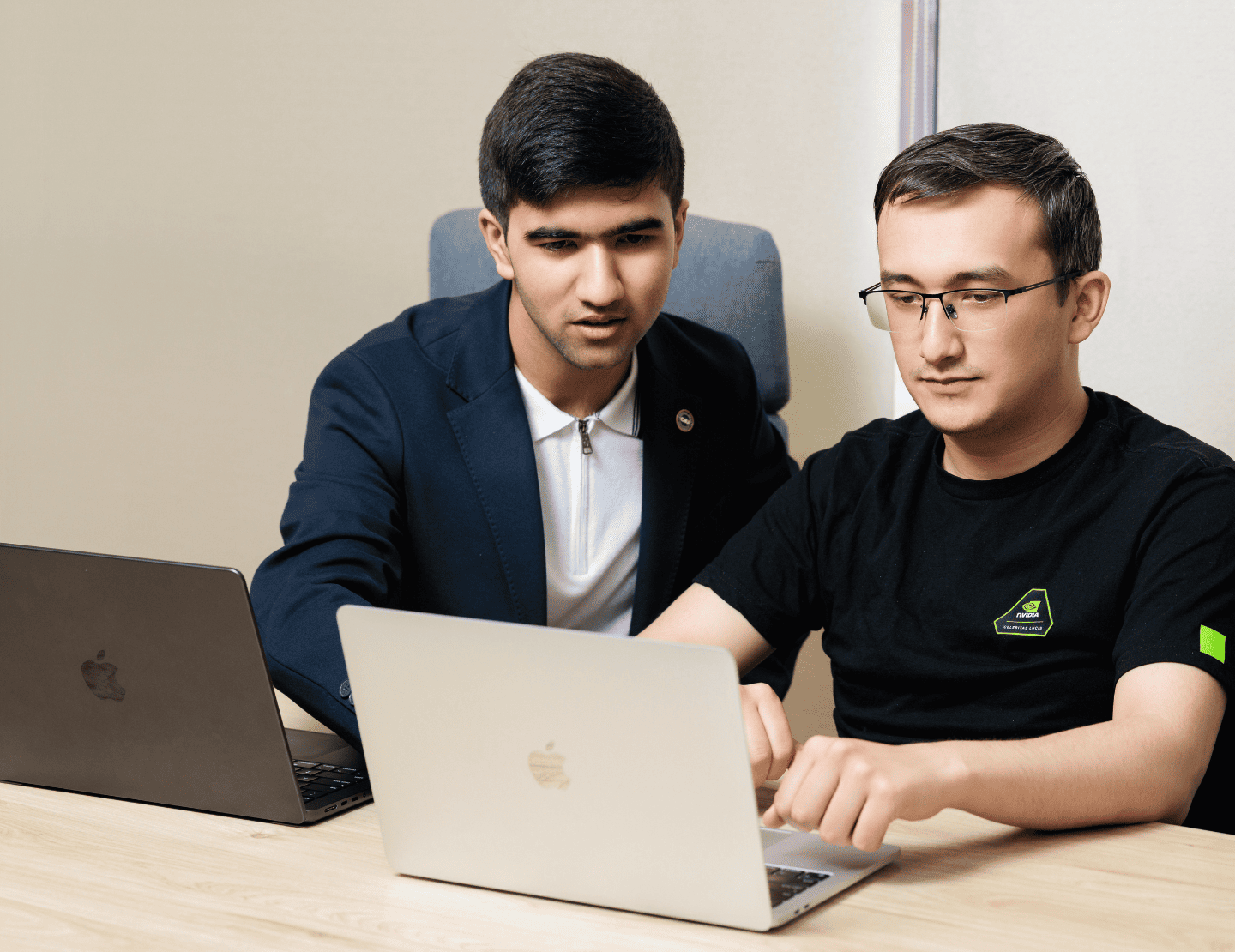
One particular moment remained with him throughout the application process - listening to a podcast featuring the founding dean discussing the value of English education, international standards, and the long-term return on investing in quality higher education. That conversation ultimately convinced him that CAU was where he wanted to study.
Coming to Tashkent from a rural area in Samarkand marked the beginning of a completely new chapter in his life. Adjusting to city life, sharing apartments with strangers, and balancing independence with academic pressure was not always easy. Yet those experiences became some of the most formative parts of his university years.
“Since we all came from different backgrounds with different worldviews and perspectives, that mix of people sparked new ideas and pushed us to collaborate,” he says.
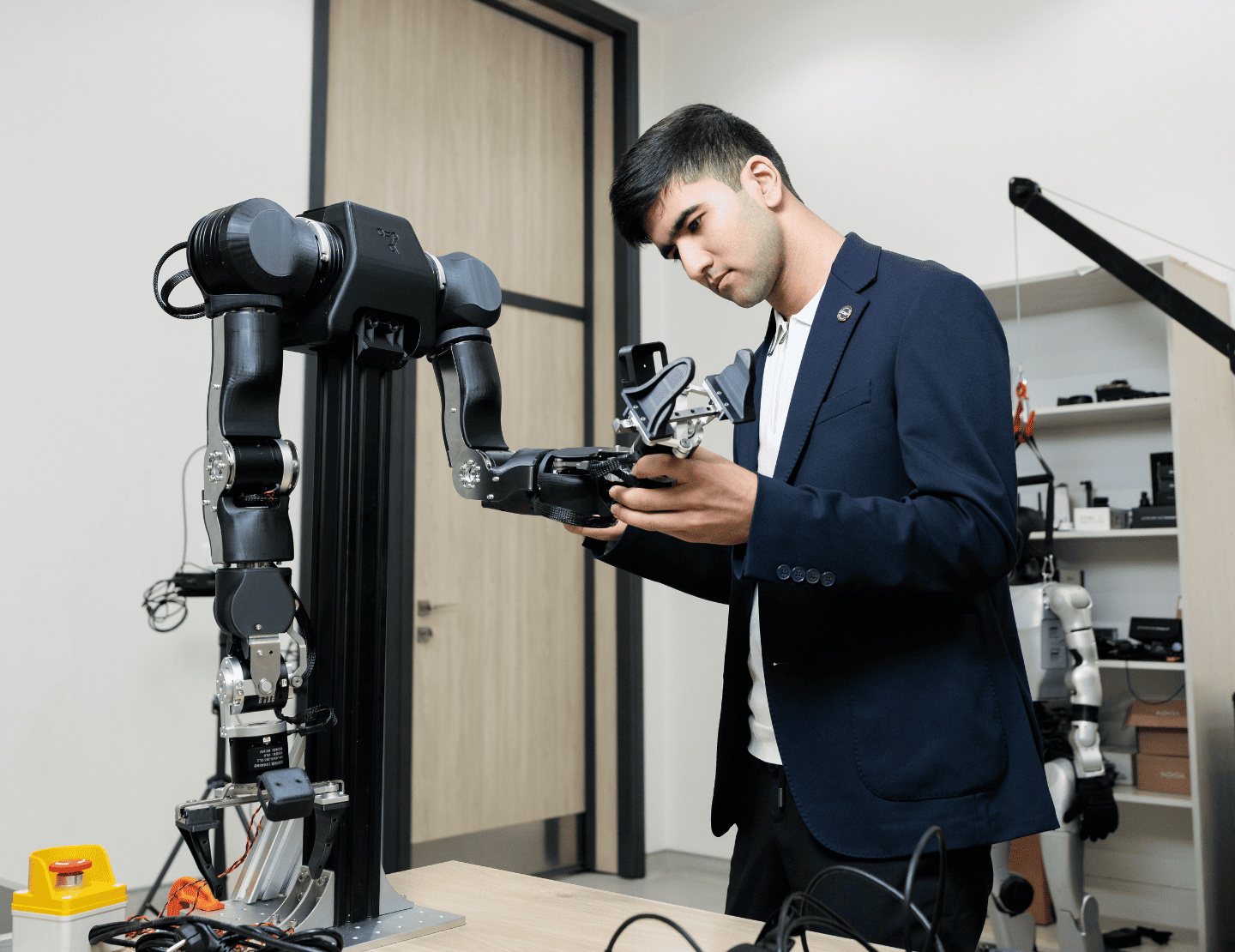
Academically, Bobirjon describes his years at the School of Engineering as deeply transformative. Rather than focusing solely on theoretical knowledge, students were constantly encouraged to understand concepts practically and apply them through projects. Courses that initially felt intimidating eventually became the foundation of his professional confidence. Advanced mathematics, particularly linear algebra, was one of those challenges. What once felt overwhelming later became one of his favorite subjects.
Several professors and courses left a lasting impression on him. He recalls his Fundamentals of Programming classes with Professor Mohammed Ali as especially influential because of the professor’s openness, patience, and dedication to students. Another memorable experience came through the Creative Design course, where students spent the semester building hardware and embedded systems projects that they later presented in practice-based showcases.
Courses like Discrete Mathematics, Machine Learning, and Computer Vision also played a significant role in shaping his engineering mindset. Today, many of the concepts he learned in those classes continue to directly influence his work in technology and product development.

Beyond academics, one aspect of CAU that Bobirjon values most is the accessibility of professors and the mentorship culture within the university. Faculty members often supported students far beyond the classroom, helping with career advice, applications, interviews, and even salary negotiations. For him, those relationships became just as important as the technical education itself.
Bobirjon’s professional journey started early. While still in school, he worked part-time as a sales assistant to help support his education. Later, he began freelancing, building Telegram bots and small software projects. His first major professional opportunity came during his second year at university, when Professor Dr. Bahodir Ahmedov invited him to work as a teaching assistant. In that role, he helped students with programming assignments, prepared learning materials, and assisted during lab sessions.
Soon after, he entered the corporate world as a data analyst at the AKFA Group, where he gained experience working in a large-scale professional environment. However, exposure to hackathons and startup communities gradually shifted his interests toward entrepreneurship and product building.
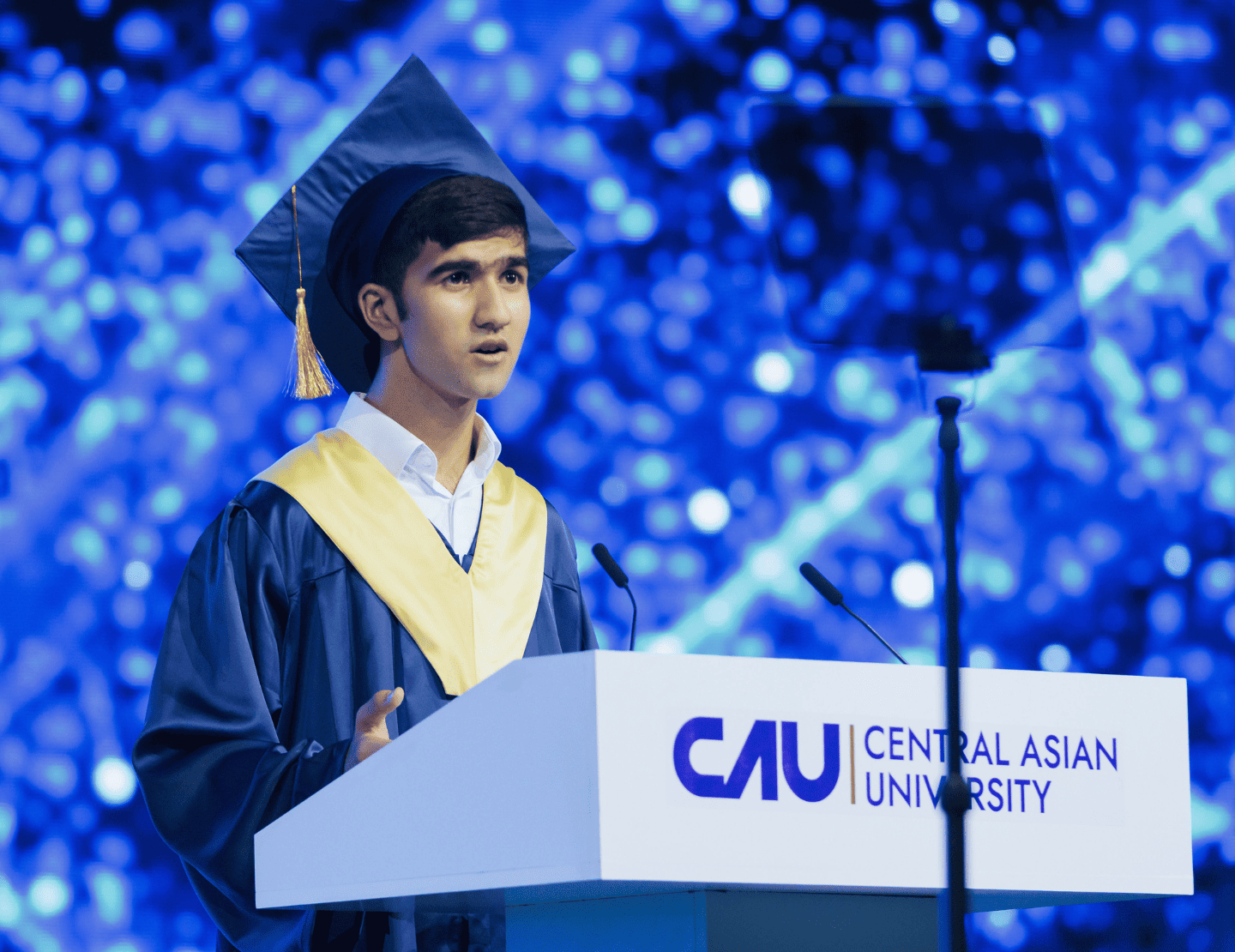
“I realized my real passion was building products and creating things that could genuinely help people,” he explains.
That realization eventually led him to leave the corporate path and explore startups more seriously. Later, he joined Korzinka Go as a data engineer, where he spent nearly two years working on large-scale technological solutions within one of Uzbekistan’s leading retail ecosystems.
Today, Bobirjon is part of a startup team working on AI and emerging technologies with the support of the university and industry partners. As an engineering lead, he is involved in developing technical solutions, building infrastructure, and contributing to the long-term vision behind the project.
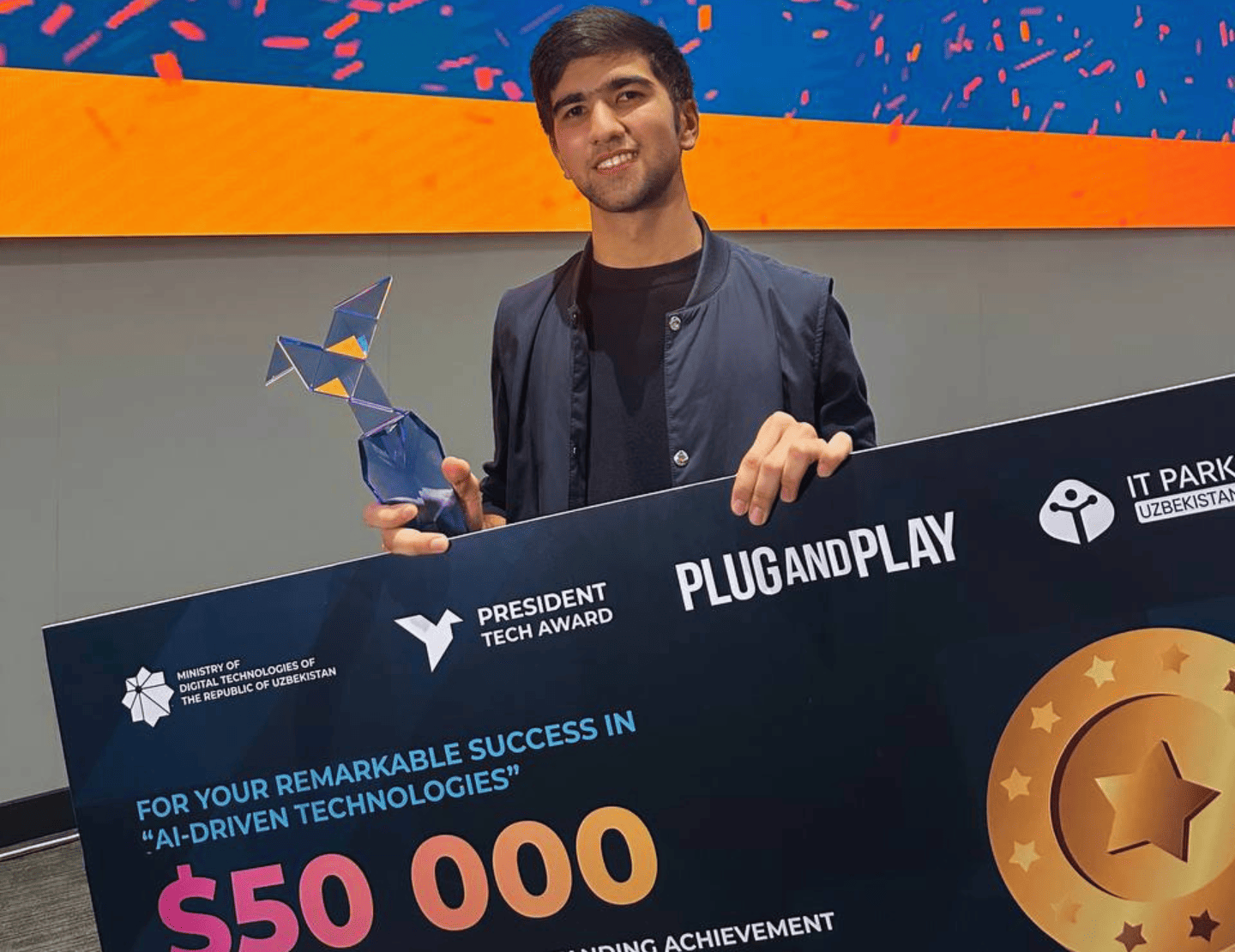
He believes artificial intelligence and advanced technologies will become an essential part of everyday life within the next decade, and he sees Uzbekistan’s young generation as fully capable of contributing to that future on a global scale.
Despite his achievements, Bobirjon openly speaks about the uncertainty and struggles he faced along the way. Financing his education was one of the biggest challenges during his first years at university. At one point, he participated in a Work and Travel program in Germany, spending months working in a factory to support his tuition and living expenses. Later, balancing difficult engineering courses with full-time work nearly pushed him to leave university altogether.
Looking back, he says those difficult periods taught him resilience, discipline, and adaptability - qualities he now considers more valuable than technical skills alone.

“Technology changes constantly. The ability to learn, adapt, and communicate with people is what truly matters,” he says.
For current engineering students, his advice is simple but direct: focus on fundamentals, develop communication skills alongside technical knowledge, and step outside your comfort zone. He encourages students to collaborate across disciplines, interact with peers from other schools, and participate in social and entrepreneurial projects while at university.
As for the future, Bobirjon hopes to gradually transition from purely technical roles into leadership and management, learning how to guide teams, support people, and build organizations that can make a meaningful impact.
More than personal success, however, his long-term goal is tied to something larger - proving that Uzbek youth can compete internationally and build technologies capable of shaping the future.
“I want our generation to aim higher,” he says. “I want people to see that talent from Uzbekistan can succeed globally, not just locally.”