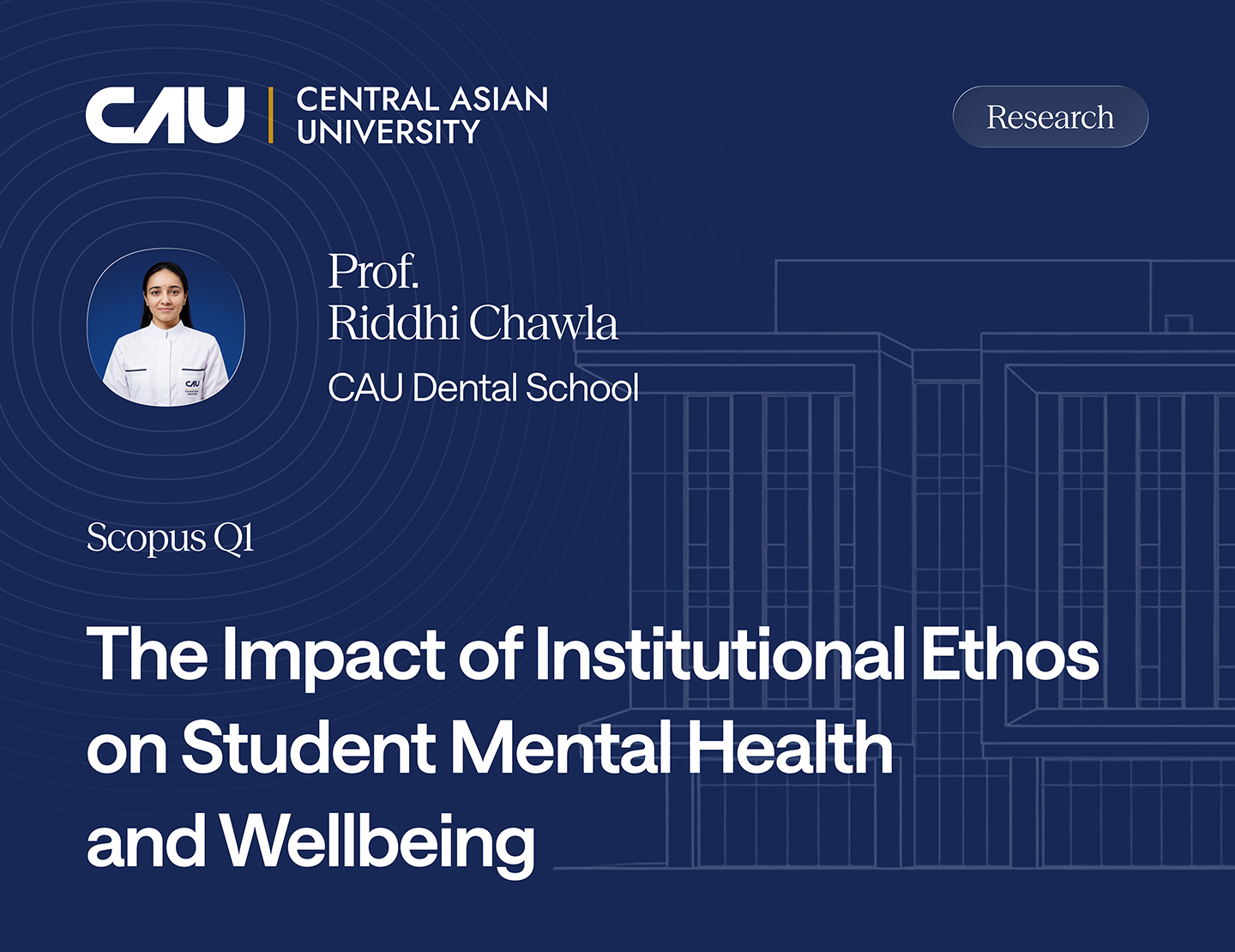
Professor Riddhi Chawla from the School of Dentistry at Central Asian University has published a solo-authored research article in the prestigious Scopus Q1-ranked journal Frontiers in Education.
The paper, "The Impact of Institutional Ethos on Student Mental Health and Wellbeing: Evaluating Whole-School Approaches," examines how a school's institutional culture, leadership, policies, and interpersonal relationships influence students' mental health, wellbeing, and academic outcomes.
Key findings
Dr. Chawla's research demonstrates that an institution's ethos—its formal policies, leadership practices, and everyday interactions—plays a central role in shaping student wellbeing.
Among the study's key findings are:
- Whole-school approach: Comprehensive institutional strategies are more effective in reducing anxiety, depression, and bullying than isolated classroom-based interventions.
- Wellbeing and academic success: The findings show that prioritizing student wellbeing supports, rather than competes with, academic achievement by creating psychologically safe learning environments that improve engagement, attendance, and academic performance.
- Teacher wellbeing: The study highlights that supporting educators through appropriate institutional structures and professional boundaries is essential for fostering positive student outcomes and preventing staff burnout.
Contribution to the UN Sustainable Development Goals
The publication also contributes to the advancement of the United Nations Sustainable Development Goals (SDGs), particularly:
- SDG 3 – Good Health and Well-being, by identifying institutional approaches that can help reduce psychological distress, anxiety, and depression among students.
- SDG 4 – Quality Education, by demonstrating that inclusive and supportive educational environments strengthen student resilience and contribute to safer and more effective learning communities.
As the sole author of the study, Professor Chawla notes that much of the existing evidence on institutional wellbeing is concentrated in Western countries. Her research provides a broader perspective and offers practical recommendations for educational leaders seeking to strengthen school culture through systemic, long-term approaches rather than isolated wellbeing initiatives.