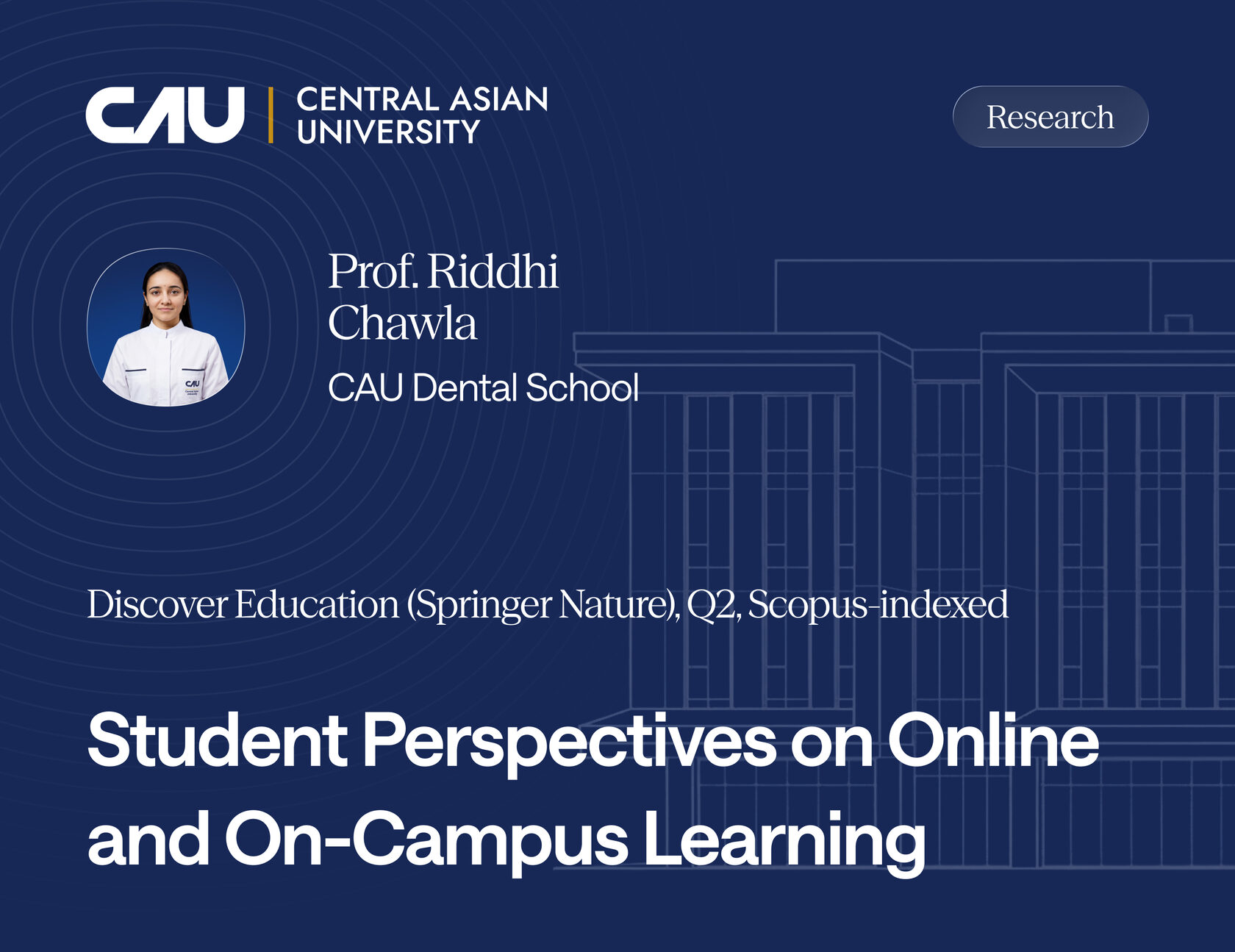
How can universities improve the quality of education while meeting the diverse needs of their students? A study published in Discover Education, a journal by Springer Nature, explores this question by comparing student perspectives on online and on-campus learning.
The research, titled “A Comparative Qualitative Study of Student Perspectives on Online Versus On-Campus Learning,” is a sole-authored Scopus Q2 publication by Prof. Dr. Riddhi Chawla of the CAU School of Dentistry. The study examines how students’ personal circumstances, learning preferences, and academic disciplines shape their experiences in different learning environments.
The qualitative research involved 40 university students at undergraduate, postgraduate, and PhD levels, representing disciplines including Dentistry, Medicine, Psychology, and Business Administration.
The findings highlight both the advantages and challenges of online and on-campus education. Online learning offers flexibility, particularly for students balancing their studies with work or family responsibilities. However, students may also experience digital fatigue, technical difficulties, and social isolation. On-campus learning, meanwhile, provides opportunities for practical training, immediate feedback from faculty, and peer interaction, but can involve challenges related to fixed schedules, travel, and additional costs.
The study points to the importance of flexible, student-centered approaches to teaching rather than relying exclusively on one learning format. A combination of online theoretical instruction and in-person activities, such as interactive workshops, clinical simulations, and direct faculty feedback, may help universities better address students’ needs across different disciplines.
By examining learning experiences from the students’ perspective, the research contributes to ongoing discussions about educational quality, curriculum development, and inclusivity in higher education.
The publication in Discover Education adds to CAU’s research contributions in the field of higher education and highlights the role of student perspectives in informing teaching practices.
Read the full research paper.