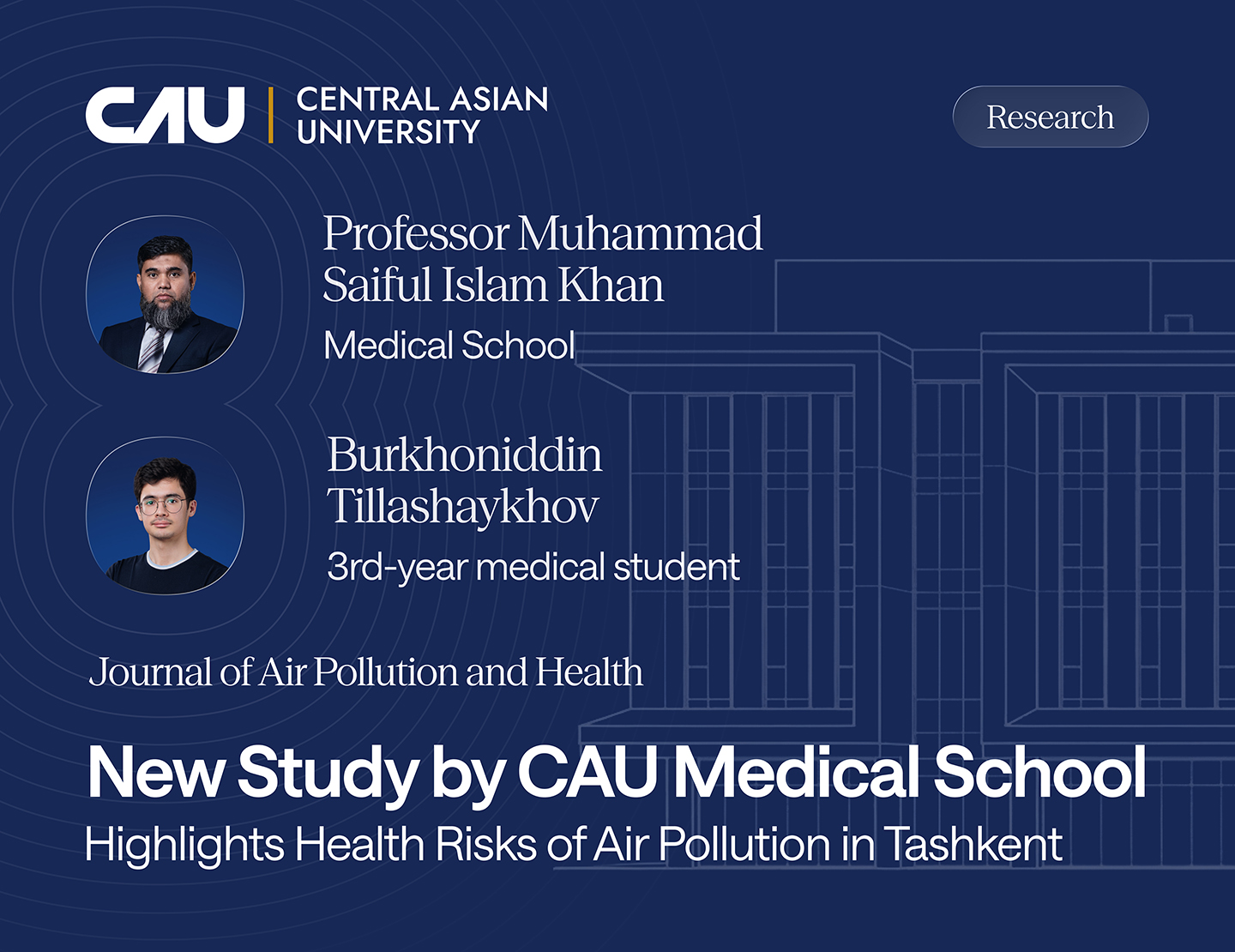
Environmental Health Research Group (Non-thermal Plasma, Food Safety, Air Pollution, and Analytical Chemistry), led by Professor Muhammad Saiful Islam Khan from the Medical School of Central Asian University, together with 3rd-year medical student Burkhoniddin Tillashaykhov, has published a scientific article titled “Uzbekistan's Air Pollution and Its Health Effects: A Data-Driven Overview of Disease Burden and Intervention Priorities” in the Scopus-indexed Journal of Air Pollution and Health.
The study investigates the relationship between urban air pollution and public health outcomes in Uzbekistan, with particular emphasis on Tashkent. Using Air Quality Index (AQI) data and Ministry of Health records from 2012 to 2024, the researchers analyzed winter PM₂.₅ concentrations alongside respiratory disease mortality trends in both urban and rural populations.
According to the findings, winter PM₂.₅ concentrations in Tashkent exceed World Health Organization (WHO) recommended limits by approximately six times. The study also identified a 24.94% increase in respiratory infection-related mortality in Tashkent during the analyzed period, whereas rural areas showed no statistically significant changes.
The researchers identified residential heating and anthropogenic urban activities as the primary contributors to worsening air pollution levels. The study further highlighted that children and elderly populations are among the most vulnerable groups affected by poor air quality.
This publication reflects the ongoing research activities within the Medical School of Central Asian University and the institution’s growing contribution to environmental health research. Professor Muhammad Saiful Islam Khan has authored more than 17 high-impact scientific publications indexed in Scopus, Web of Science, PubMed, and other international databases. The article was published in the international peer-reviewed Journal of Air Pollution and Health.