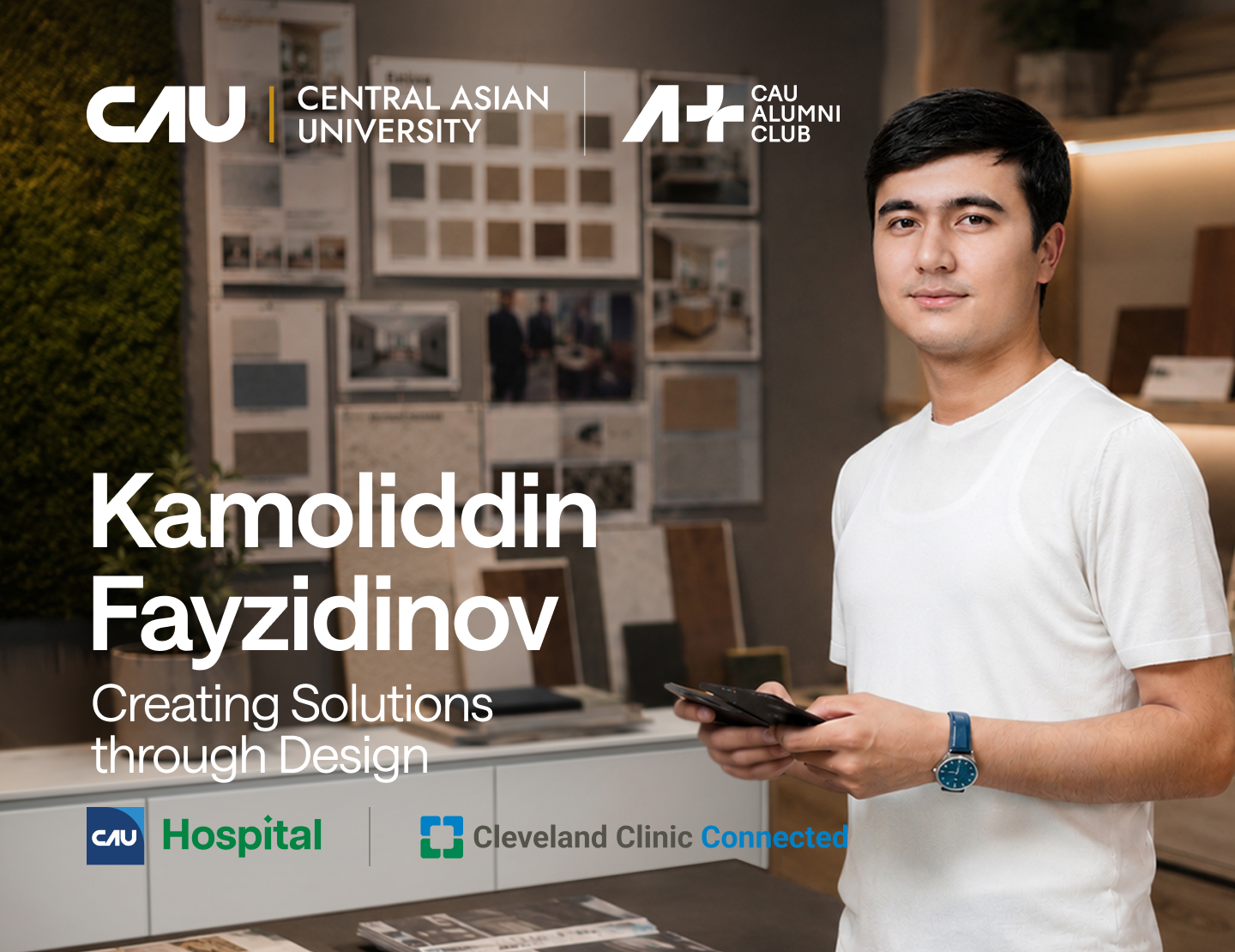
For many students, architecture begins with drawings and aesthetics. For Kamoliddin, however, it began with curiosity - desire to understand why spaces are designed the way they are and how they could become better.
Today, that curiosity has evolved into professional experience on some of Uzbekistan’s most ambitious medical construction projects, including the development of the world-renowned CAU Hospital Project Team - Cleveland Clinic Connected project and the large-scale Social Project Team.
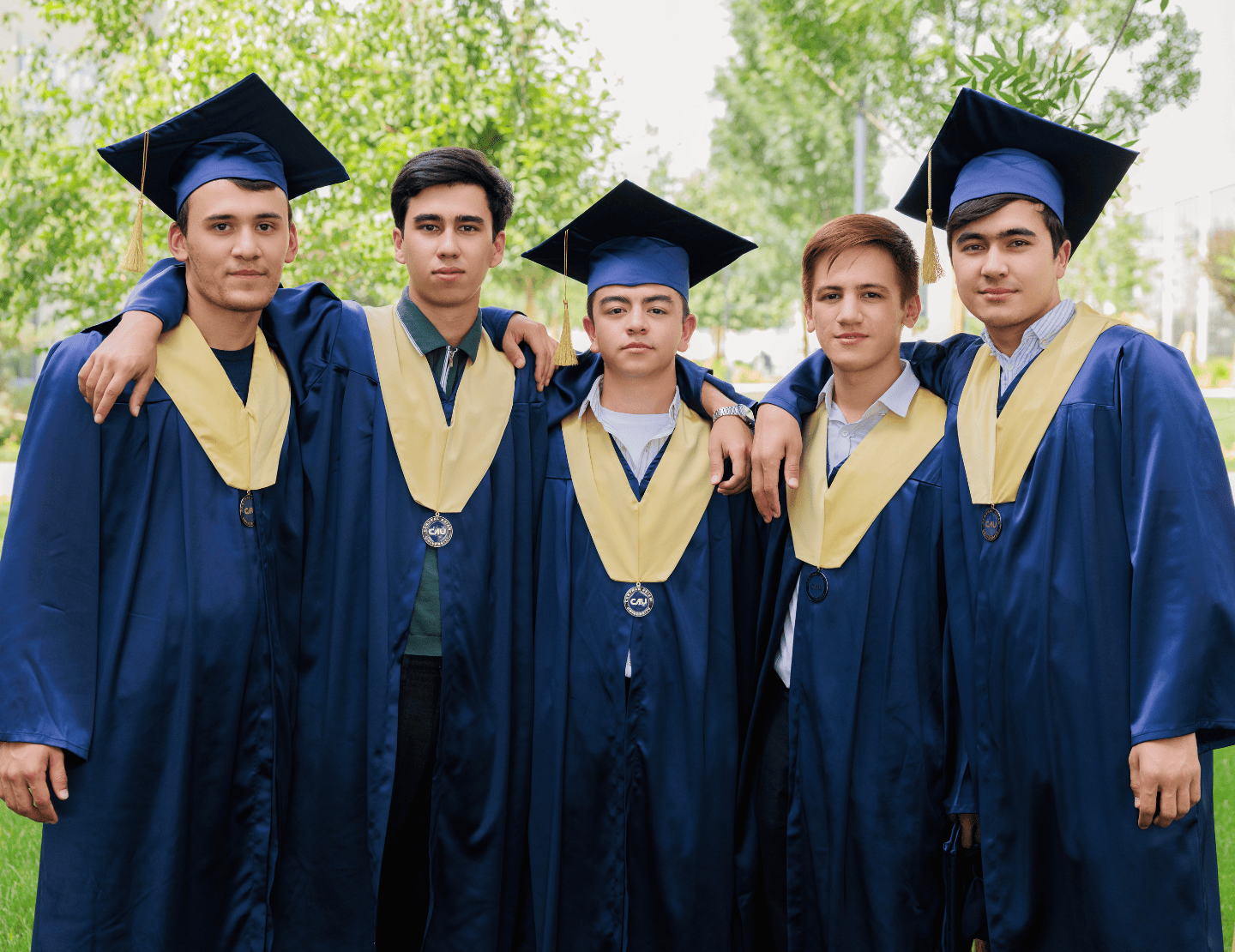
Kamoliddin, a graduate of the Architecture and Design direction at Central Asian University, believes that his academic journey played a defining role in shaping not only his professional skills, but also his mindset.

“What attracted me to CAU was the environment,” he explains. “Education here is not limited to memorizing information. Students are encouraged to think independently, analyze deeply, and approach complex problems critically.”
According to him, this approach completely transformed the way he viewed design. Before university, he associated design mostly with visual beauty. At CAU, he discovered that design is fundamentally about solving problems and improving people’s lives.
“Every project has a human story behind it,” he says. “You begin to understand that architecture is not just about buildings - it is about the people who use those spaces every day.”
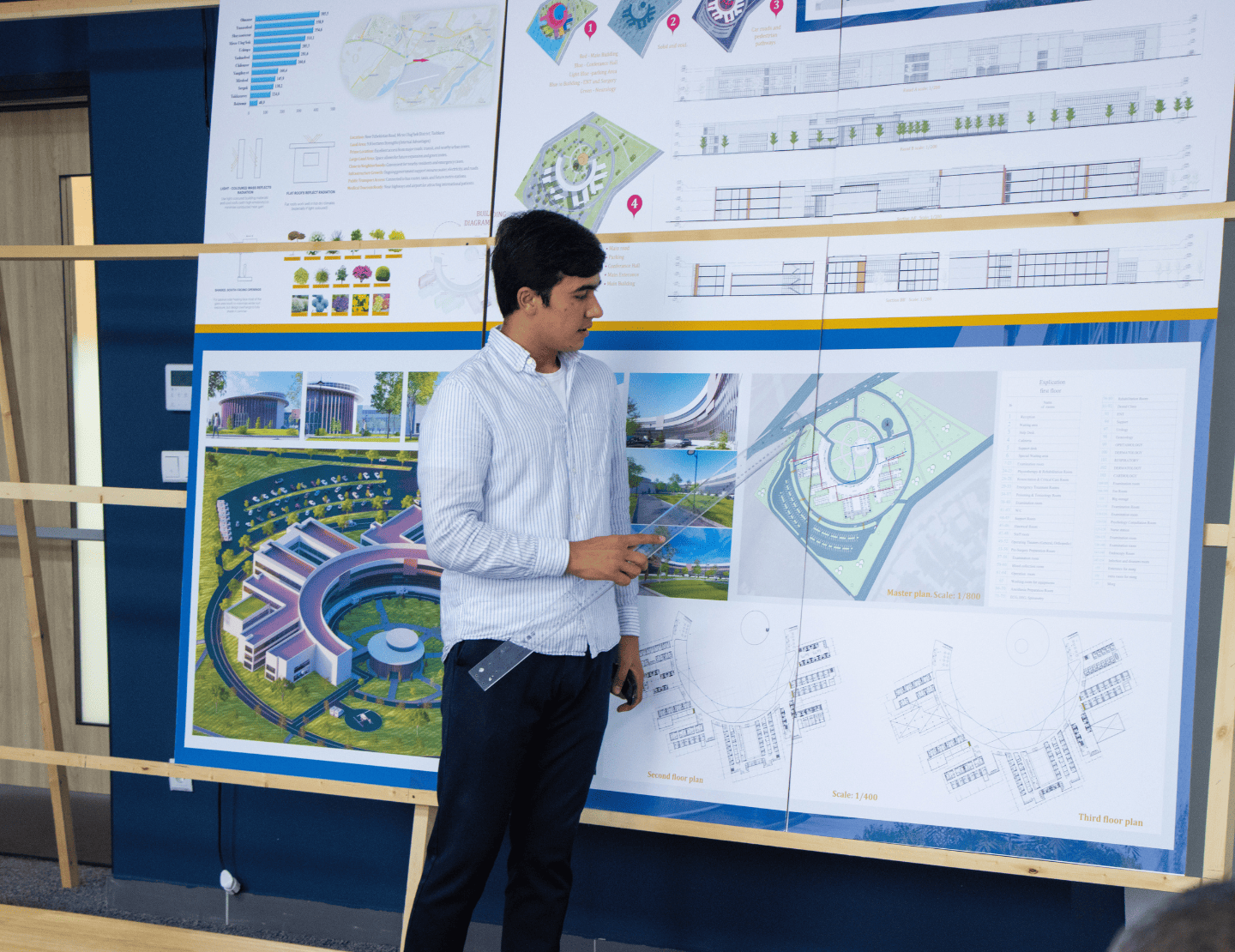
One of the most memorable experiences during his studies was participating in a project that closely simulated a real construction environment. It was there that he first encountered the gap between an “ideal design” and real-world limitations.
“We had to rethink many of our decisions,” Kamoliddin recalls. “That process taught me something important: a good designer is not simply someone who creates beautiful concepts, but someone who can make the right decisions under real conditions.”
His professional journey began at LAB - CAU Diagnostics, where he gained firsthand exposure to the connection between medical systems, technical infrastructure, and design. The experience became a strong foundation for his future career in healthcare architecture.

Today, Kamoliddin works within CAU Hospital Project Team as a project engineer and interior designer on major medical developments across Uzbekistan. His responsibilities go far beyond aesthetics. They include functionality analysis, ergonomic planning, compliance with healthcare standards, technical documentation, material selection, and project implementation from concept to completion. Working in construction, he says, comes with constant challenges.
“What looks perfect on paper can change completely during construction,” he explains. “In those moments, adaptability and fast decision-making become the most important skills.”
Despite the demanding pace, Kamoliddin finds motivation in dynamic environments, strong teams, and ambitious projects that continuously push him toward growth.

His advice to younger students is simple but practical: “Don’t just study - start doing. The earlier you gain practical experience, the faster you grow. And don’t wait to become perfect before taking action.”
Looking ahead, he sees himself becoming an independent specialist leading major international-scale projects within the next few years. Yet, when reflecting on his own path, he admits there is one thing he would change.
“I would spend less time overthinking and more time acting,” he says. “Experience is what ultimately separates you from others.”
Kamoliddin’s story reflects a new generation of professionals emerging from Central Asian University - specialists who combine creativity with analytical thinking and are already contributing to the future of healthcare infrastructure in Uzbekistan.