Central Asian University is demonstrating in practice that medical education can be built differently — not only through theory, but also through the design, implementation, and testing of real healthcare systems before they are launched.
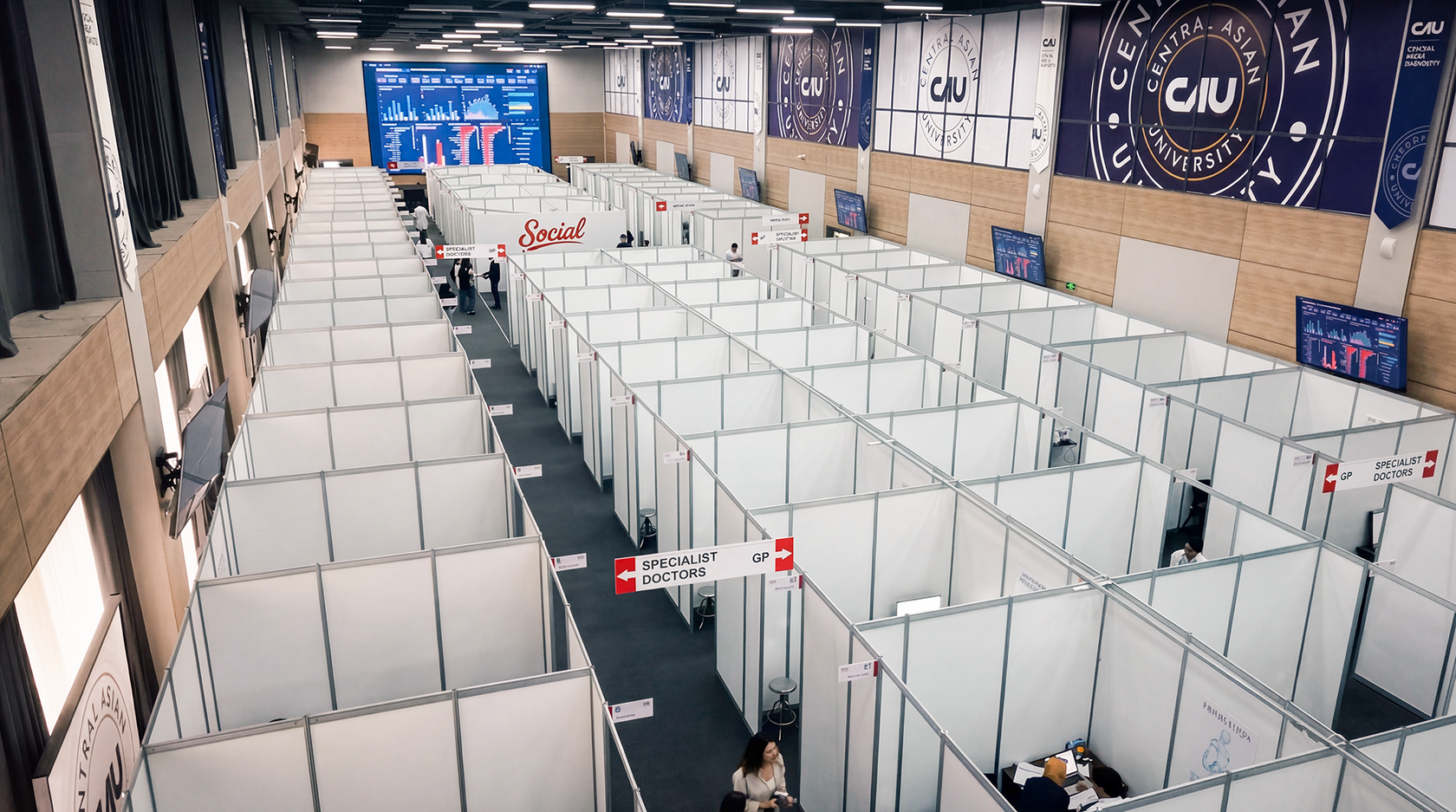
On the campus of Central Asian University, a full-scale model of a diagnostic center has been deployed, closely replicating a real clinic in terms of operational logic, patient routing, flow distribution, and coordination between key units. This is not an academic concept, but a prototype of a future system that is currently in an active phase of development.
The simulation is conducted over six days with a capacity of approximately 1,000 patients per day. The project is implemented at a 1:3 scale of the Social diagnostic center currently under construction, making it possible to test not isolated elements, but the logic of the future system as a whole. This scale allows the university to reproduce heavy workloads, нестандартные situations, overload, disruptions, and variable patient behavior in conditions that are as close as possible to real clinical practice.
The simulation is conducted over six days with a capacity of approximately 1,000 patients per day. The project is implemented at a 1:3 scale of the Social diagnostic center currently under construction, making it possible to test not isolated elements, but the logic of the future system as a whole. This scale allows the university to reproduce heavy workloads, нестандартные situations, overload, disruptions, and variable patient behavior in conditions that are as close as possible to real clinical practice.
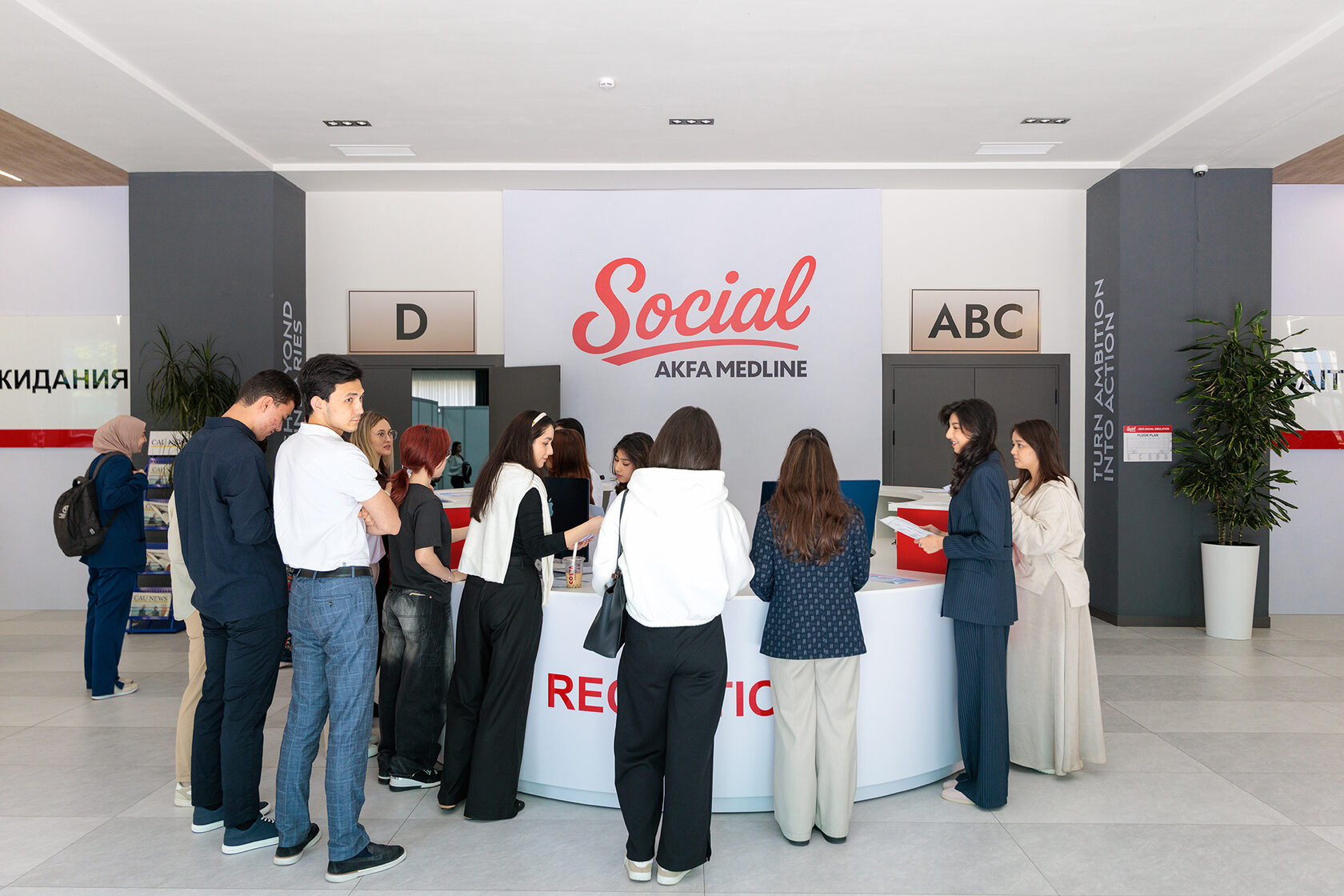
The purpose of the simulation is not only to rehearse scenarios, but also to determine exactly at which stages queues are formed, where patient flow may break down, how well physicians perform under time pressure, and what actual workload falls on family physicians. The university applies a research-based approach to analyzing the results: all data will be systematized and studied, and following the simulation, CAU plans to publish a separate scientific study.
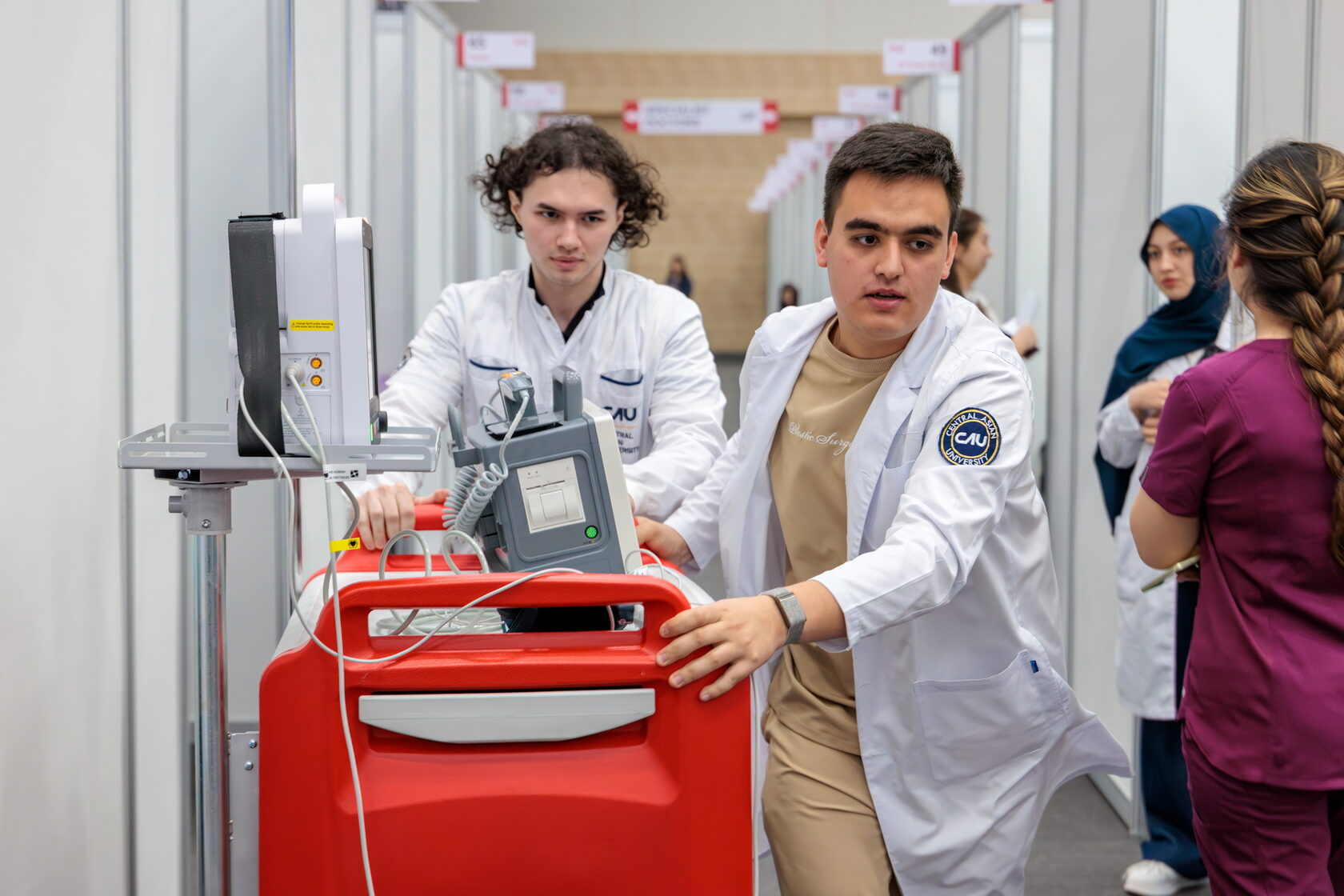
The project involves hundreds of participants, including CAU students and residents, who take on the role of physicians, receive patients in real time, engage in clinical scenarios, and make decisions under time constraints. This approach creates not an observational, but a hands-on training model in which future specialists become part of a functioning system while they are still in training.
The project involves hundreds of participants, including CAU students and residents, who take on the role of physicians, receive patients in real time, engage in clinical scenarios, and make decisions under time constraints. This approach creates not an observational, but a hands-on training model in which future specialists become part of a functioning system while they are still in training.

“This is one of the most valuable and inspiring learning formats I have ever experienced. The simulation gives you a real opportunity to see how a clinic works from the inside and to feel the responsibility of being a doctor not in theory, but in practice. You realize how important it is to make quick decisions, interact with patients, and work as part of a team. This kind of experience makes education far more meaningful and truly brings you closer to the real profession. I would strongly encourage applicants who want not just to study, but to immerse themselves in a real medical environment from the very beginning, to pay attention to this kind of training,” said Marlen Ibragimov, a student of the Medical School at Central Asian University.
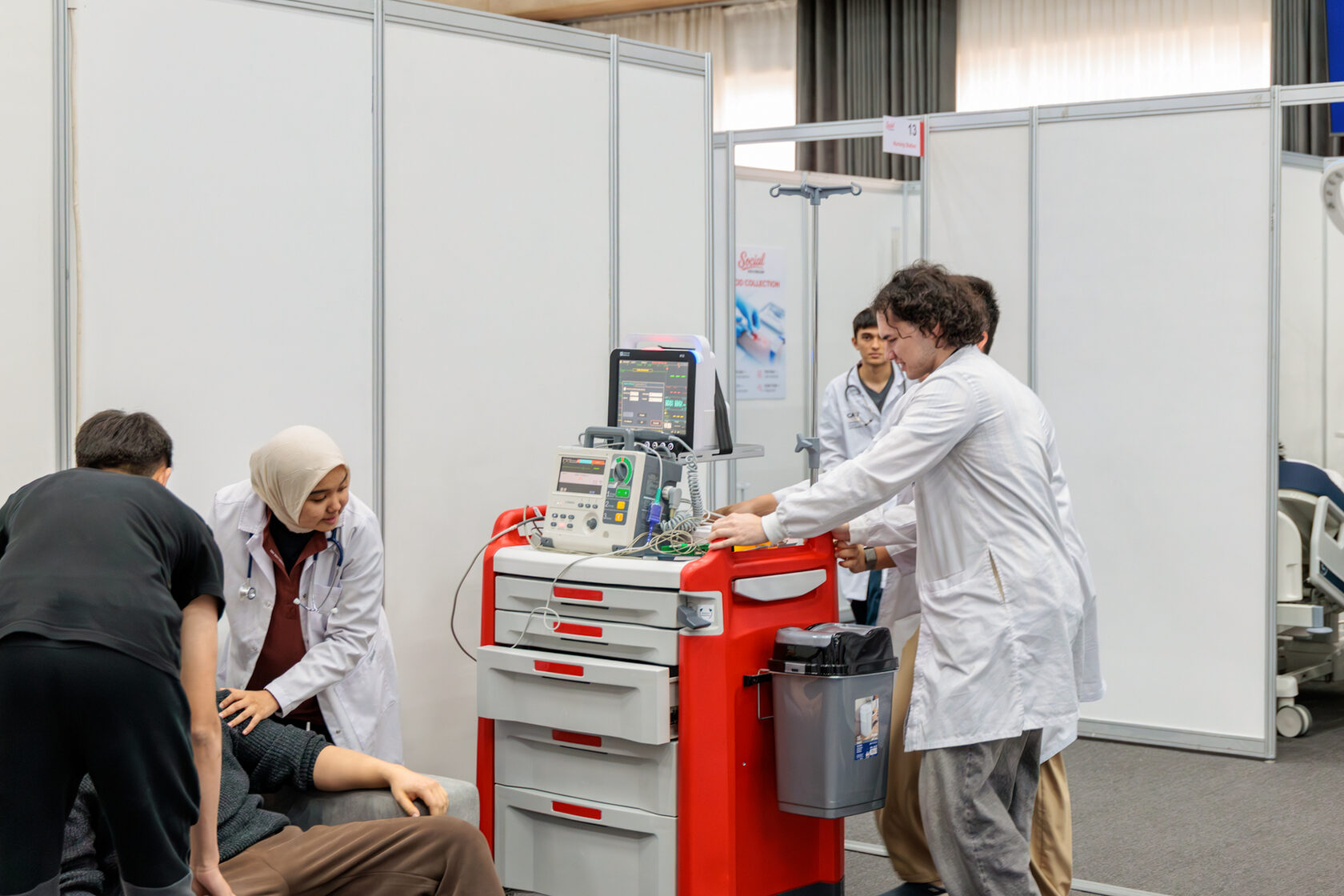
Particular attention is given to stress and critical scenarios. The simulation includes overload, routing failures, sharp increases in patient flow, and process disruptions. A dedicated block focuses on emergency diagnostics and urgent care, where critical conditions and situations requiring fast and accurate decisions are recreated in circumstances where the cost of error is measured in time and human life.
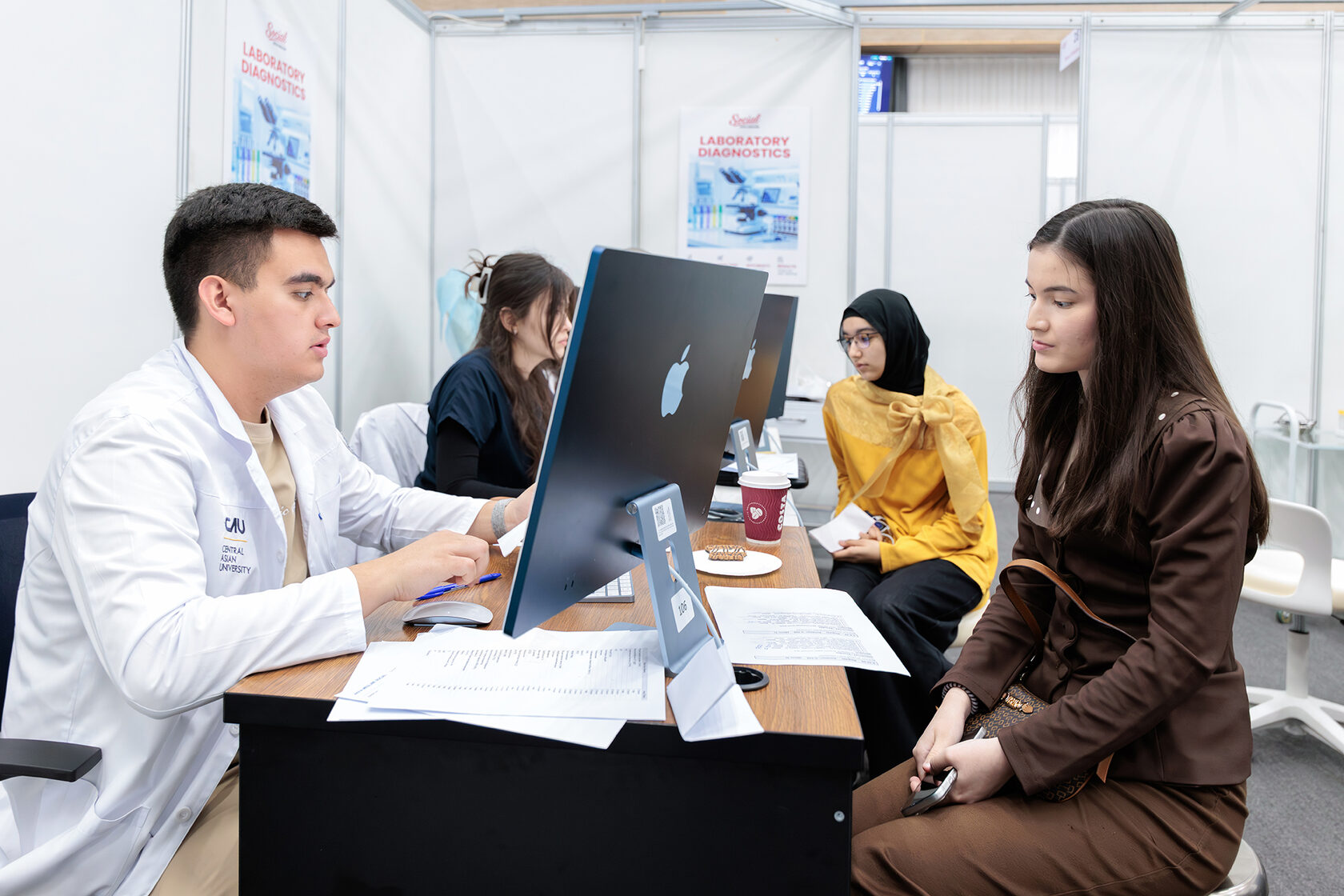
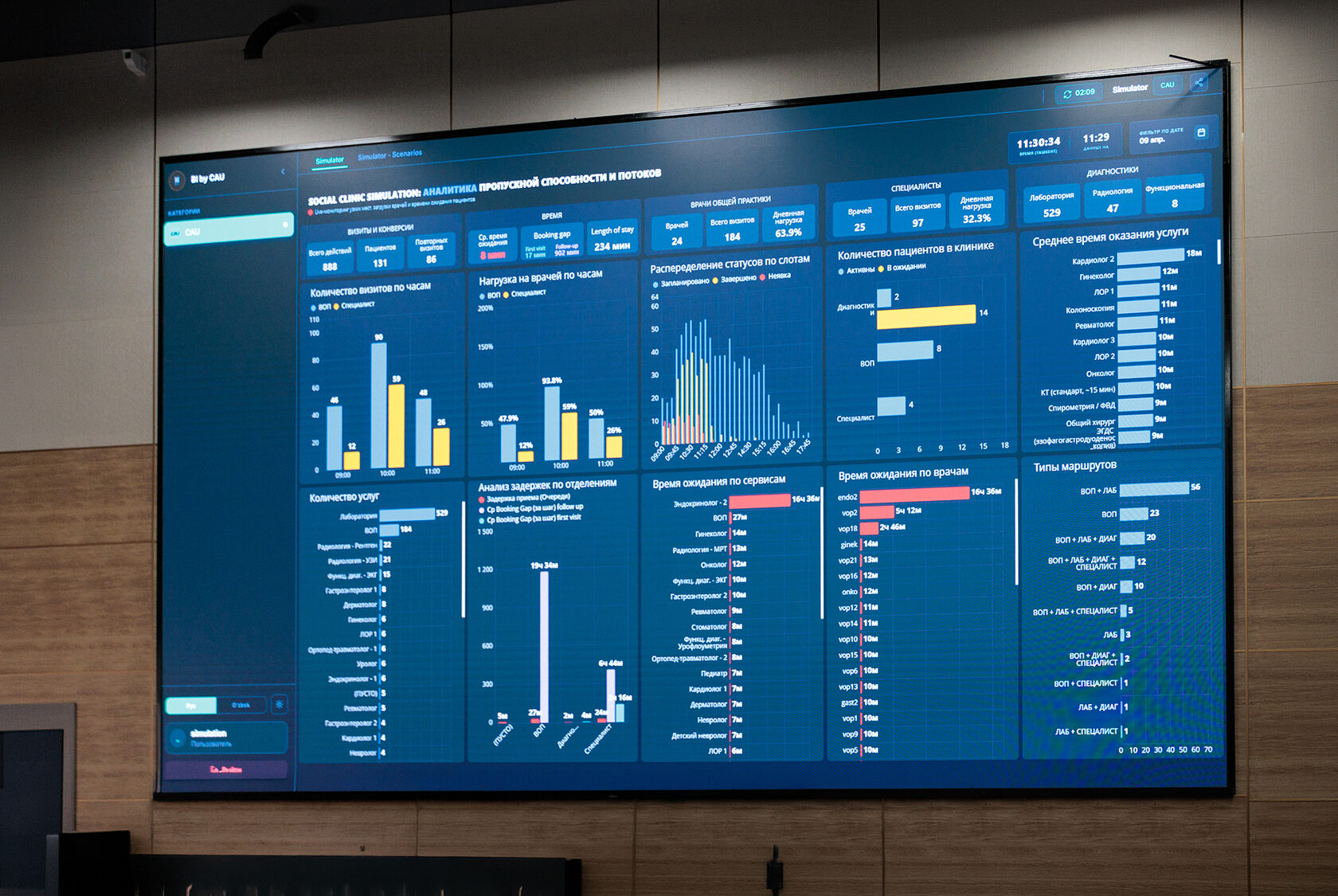
All processes are fully digitized. Data is managed and analyzed through a specially developed IT infrastructure and a unified command center created specifically for the simulation project. In real time, key performance indicators are tracked, including waiting time, specialist workload, patient movement, and routing efficiency. This makes it possible not only to assess the resilience of the future model, but also to identify practical insights for organizing the work of the Social diagnostic center.
“This is a unique and truly innovative project not only for the university, but for the entire region. We are creating an environment in which students and residents gain practical experience on a scale that is as close as possible to a real healthcare system. Participation in such a simulation develops clinical thinking, the ability to work under pressure, make decisions in uncertain conditions, and understand the logic of the system as a whole. It is a fundamentally different level of preparation for medical professionals,” said Dr. Murodbek Akhrorov, Dean of the Medical School at CAU.
For the region, this project is becoming a new benchmark in the training of medical professionals. Central Asian University is demonstrating an approach in which the university not only educates future doctors, but also tests in advance a next-generation healthcare model — managed, digital, and built on real practice.