
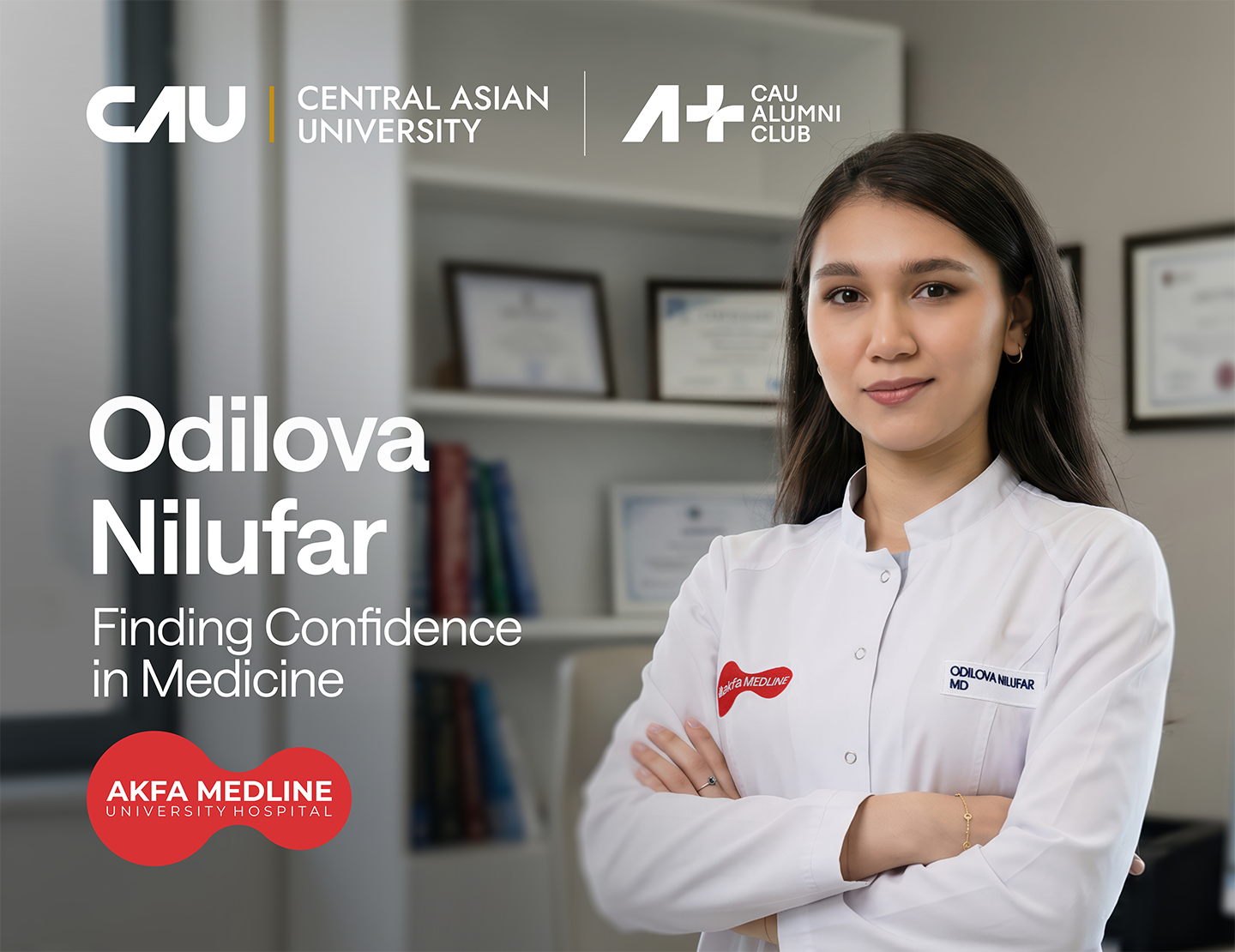
Nilufar Odilova’s professional journey began at Central Asian University. Today, she is a neurology resident at AKFA Medline, combining clinical practice with research, and has recently presented her research at the 6th International Congress of Neurology in Dubai.
Her education at CAU provided a strong foundation that continues to support her in both clinical practice and research. The university helped her develop the habit of seeking and analyzing information independently, working with academic sources, and exploring topics beyond the curriculum. These skills became especially valuable as she began developing not only as a doctor but also as a researcher.

“My advice to students is to start learning how to write articles and conduct research alongside their studies. When you have a strong academic background, it is much easier to integrate your knowledge into practice rather than starting from scratch.”
One of the outcomes of this approach was the research Nilufar presented at the international congress in Dubai. Her work focused on a rare clinical case that was initially misdiagnosed. The initial treatment proved ineffective, and further diagnostic evaluation led to the correct diagnosis of multifocal motor neuropathy (MMN).
For Nilufar, it was her first international conference and an opportunity to step beyond her familiar professional environment. She received feedback not only on her research, but also on her abstract, poster, and clinical reasoning. Listening to world-class specialists and exchanging knowledge with colleagues from different countries gave her a broader perspective on modern neurology and valuable insight into her own professional development.
One piece of advice she heard at the congress particularly stayed with her. The founder and chairman of the UAE Neurology Residency Program told her: “Always aim and wish for something big, and it will come to you in the best way.”
Today, Nilufar’s professional development continues at AKFA Medline. One of the biggest challenges, she says, has been the transition from university theory to real clinical practice, where not every situation has a ready answer in a textbook. Experience, mentorship, and learning from specialists across different fields have become an important part of this process.
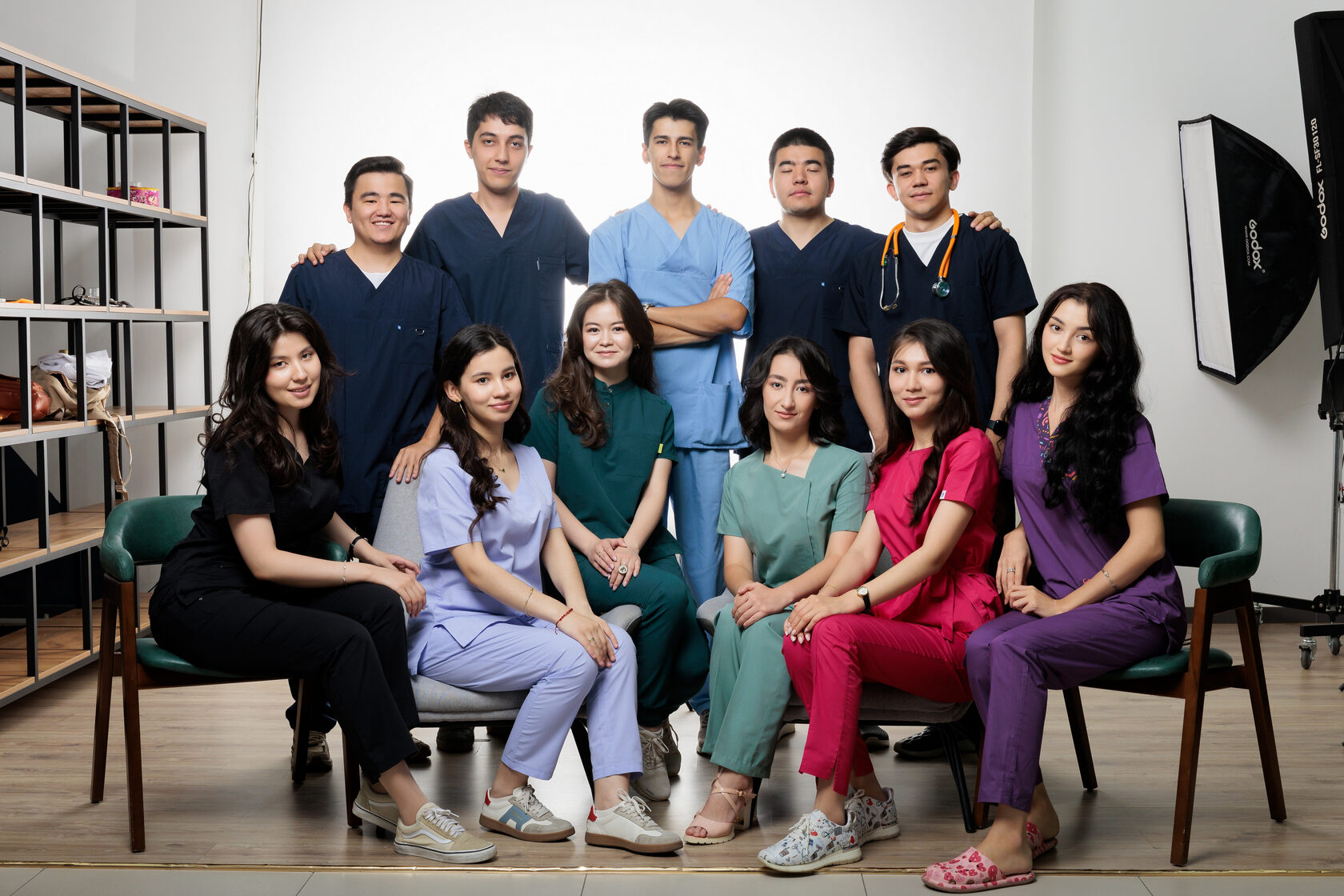
Participating in multidisciplinary team meetings allows her to approach clinical cases from different perspectives, develop broader clinical thinking, and identify new areas for research.
Nilufar also admits that she doubts herself almost every day. For her, however, doubt is part of being a responsible doctor: the willingness to double-check a decision can be more important than confidence for its own sake. Confidence, she believes, comes gradually with experience.
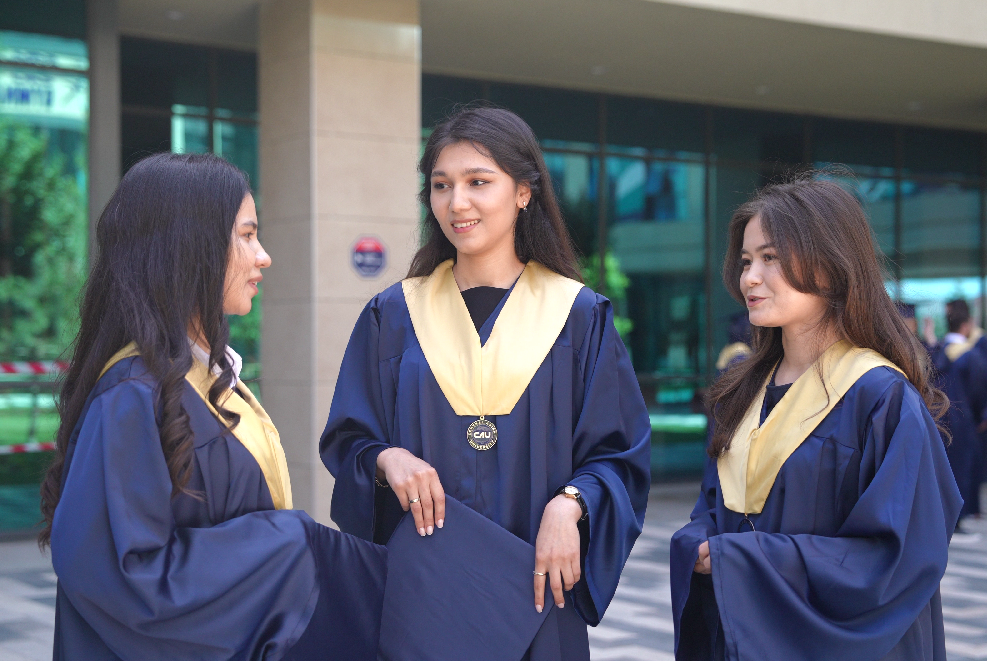
At the heart of her approach to growth is one simple principle: consistency. Big achievements are built through small actions repeated every day. It is the same principle she encourages students to apply to research and their own professional development.

Nilufar’s story shows how a strong university foundation can become the beginning of a much larger professional journey — from her first academic steps at CAU to clinical practice, research, and the international medical community.
