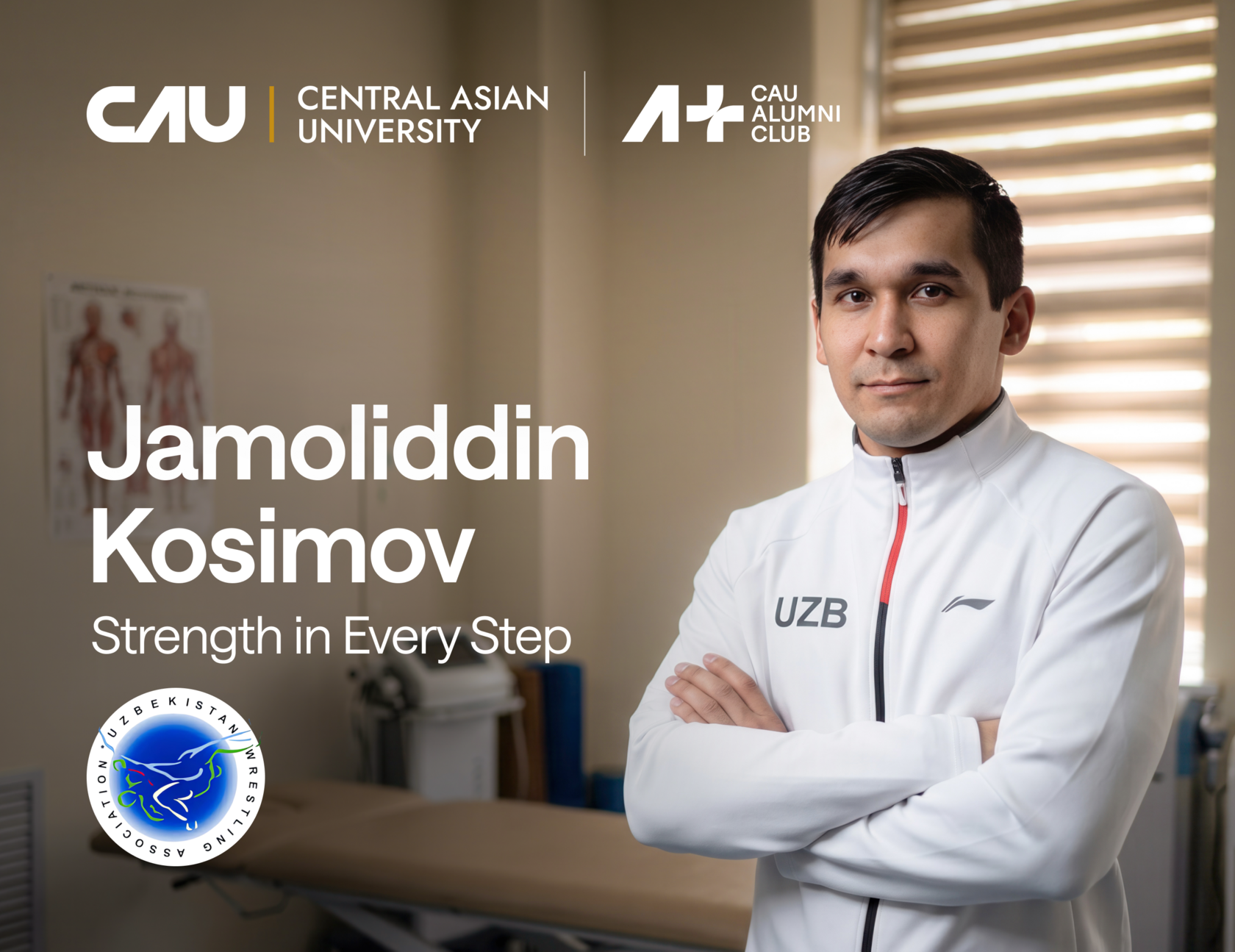
For Jamoliddin Kosimov, medicine has always gone hand in hand with sport. Today, as a Sports Physician at the Uzbekistan Wrestling Association, he combines both passions by helping elite athletes stay healthy, prevent injuries, and perform at their best.
Choosing Central Asian University was a deliberate decision. The opportunity to study medicine in English, combined with a comfortable learning environment, provided the international perspective he was looking for from the very beginning.
"I chose CAU because it offered medical education in English and a learning environment where I felt comfortable."
While pursuing his medical degree, Jamoliddin continued his lifelong involvement in sports. As an athlete himself, he always envisioned a career connected to the sporting world. After graduation, an opportunity to work in sports medicine arose, and it became a natural next step.
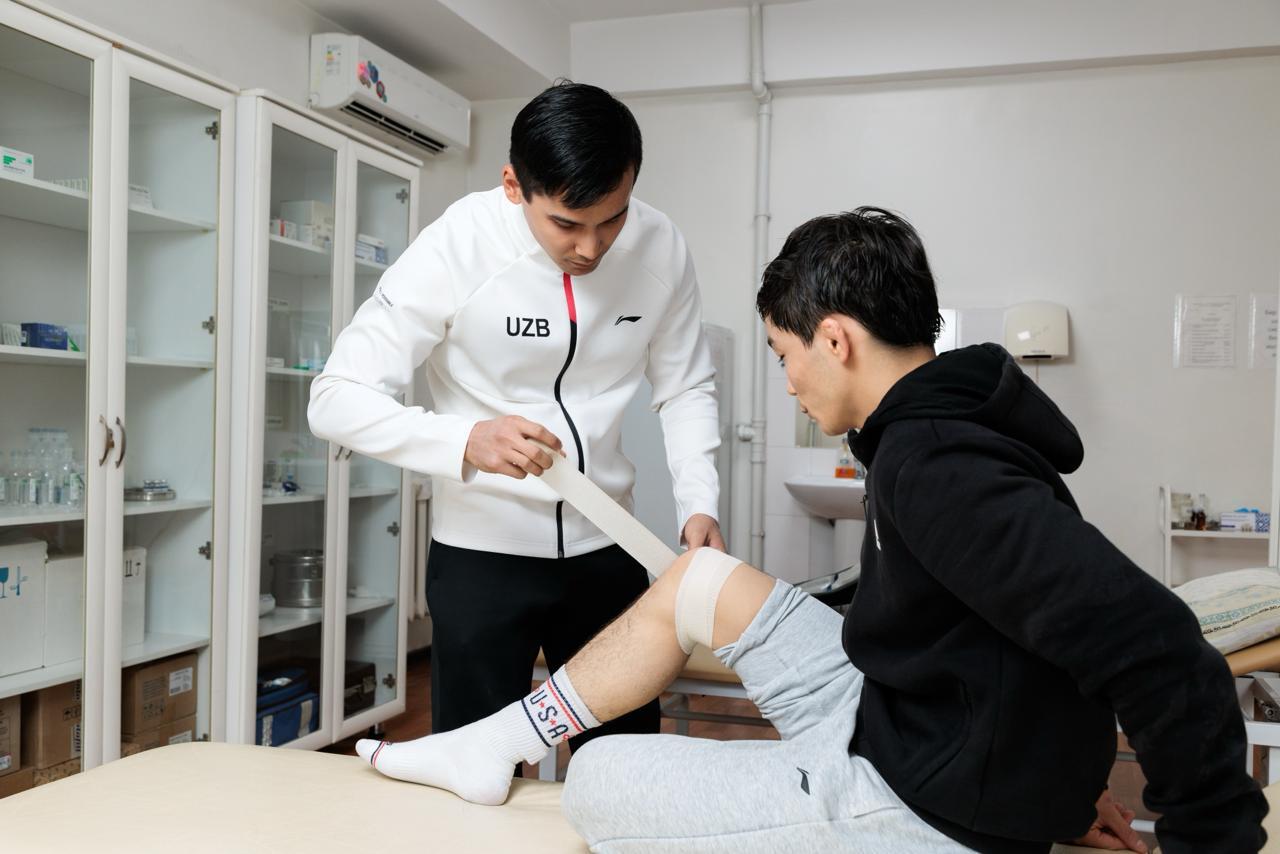
Today, his responsibilities extend far beyond treating injuries. He works closely with wrestlers to develop injury prevention strategies, support rehabilitation, optimize nutrition, and help athletes maintain the right balance between training intensity and recovery. He also recommends evidence-based supplements such as collagen, vitamin D, and calcium when appropriate, emphasizes daily stretching routines, and highlights the importance of seven to eight hours of sleep for recovery and performance.
One of the biggest distinctions between sports medicine and general clinical practice is the strict regulation surrounding medications.
"Before prescribing any medication to an athlete, we must first determine whether it complies with anti-doping regulations. This is one of the biggest responsibilities in sports medicine."
The most common conditions he encounters include shoulder, knee, and lower back injuries. However, he believes that one of the most challenging aspects of his profession is not physical treatment, but understanding the athlete's psychological state — particularly before major international competitions, when competitors are managing weight cuts, intense training schedules, and significant emotional pressure.
Reflecting on his education, Jamoliddin credits CAU with helping him develop a structured, evidence-based approach to medicine by introducing students to international clinical guidelines. He also expresses special gratitude to Dr. Ulugbek Turaboyev, whose teaching inspired his interest in sports medicine and traumatology.
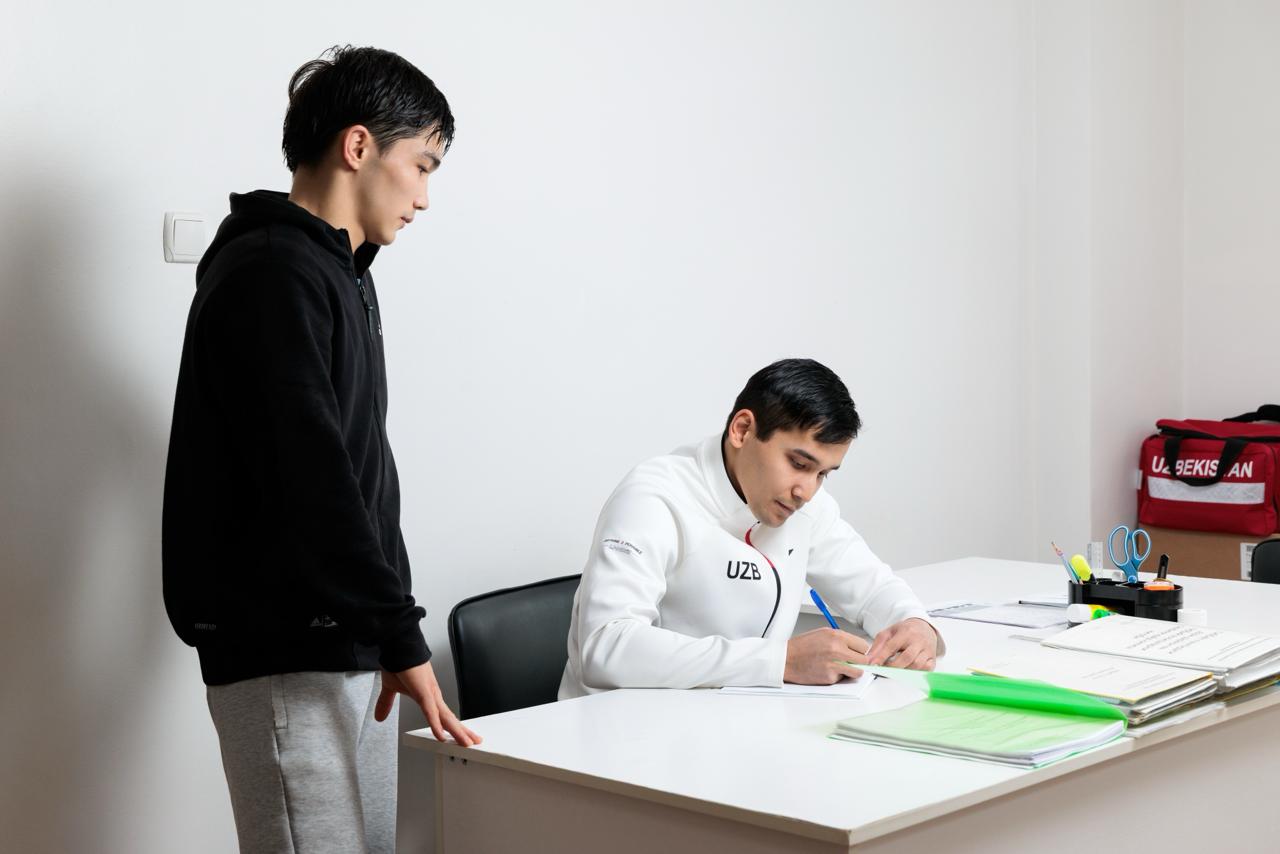
At the same time, he encourages future students to seek as much practical experience as possible, noting that clinical exposure is one area that can never be replaced by classroom learning alone.
Looking ahead, Jamoliddin believes that success in sports medicine requires flexibility, resilience, and genuine enthusiasm for sport. The profession often involves extensive travel, irregular schedules, and working during holidays whenever athletes are preparing for competitions.
His advice to aspiring medical students is straightforward:
"Don't choose medicine because someone else wants you to. Choose it only if it is truly your passion. Be willing to take risks, become mentally resilient, and if you dream of sports medicine, make sure you genuinely love sports."