
No Poverty
End Poverty in all its forms everywhere

Central Asian University’s Commitment to Ending Poverty
Central Asian University is committed to contributing to the eradication of poverty through education, research, and community engagement. In alignment with the United Nations Sustainable Development Goal 1 - No Poverty, the University integrates social responsibility and equity into its institutional culture. CAU recognizes that poverty is not only a matter of financial limitation but also limited access to education, healthcare, and opportunities for inclusion. Therefore, the University’s initiatives aim to address the multidimensional nature of poverty, ensuring that progress and prosperity reach all members of society.
CAU’s commitment to poverty reduction begins with research-driven innovation. University researchers have examined advanced frameworks for assessing and addressing non-monetary poverty, including studies such as “Measuring Non-Monetary Poverty via Machine Learning and Neutrosophic Method.” This research provides multidimensional poverty assessment tools that support more equitable policy targeting. By employing artificial intelligence and computational models, the study identifies social and economic disparities more accurately, enabling policymakers and institutions to design effective and inclusive poverty-reduction strategies. These efforts contribute not only to SDG 1 (No Poverty) but also to SDG 10 (Reduced Inequalities), reflecting CAU’s integrated and evidence-based approach to sustainable development.
CAU’s commitment to poverty reduction begins with research-driven innovation. University researchers have examined advanced frameworks for assessing and addressing non-monetary poverty, including studies such as “Measuring Non-Monetary Poverty via Machine Learning and Neutrosophic Method.” This research provides multidimensional poverty assessment tools that support more equitable policy targeting. By employing artificial intelligence and computational models, the study identifies social and economic disparities more accurately, enabling policymakers and institutions to design effective and inclusive poverty-reduction strategies. These efforts contribute not only to SDG 1 (No Poverty) but also to SDG 10 (Reduced Inequalities), reflecting CAU’s integrated and evidence-based approach to sustainable development.
The University also promotes the concept of pro-poor tourism through its Hotel and Tourism Department. By embedding social inclusion and community empowerment into tourism education, CAU prepares future professionals to support local economies and promote equitable growth. Students are encouraged to explore how tourism can serve as a tool for poverty alleviation, create employment opportunities, and strengthen small local enterprises. Such initiatives ensure that the benefits of tourism are distributed fairly across communities, particularly those in rural or economically disadvantaged regions.
Beyond research and curriculum, CAU actively participates in social outreach and community-based support. The University community organizes and participates in regular volunteering programs aimed at assisting vulnerable groups. Students and staff contribute their time and resources to improve the lives of those most affected by poverty, creating a bridge between academic learning and civic responsibility. These initiatives have become a core part of the University’s identity, encouraging a sense of empathy, responsibility, and leadership among students.
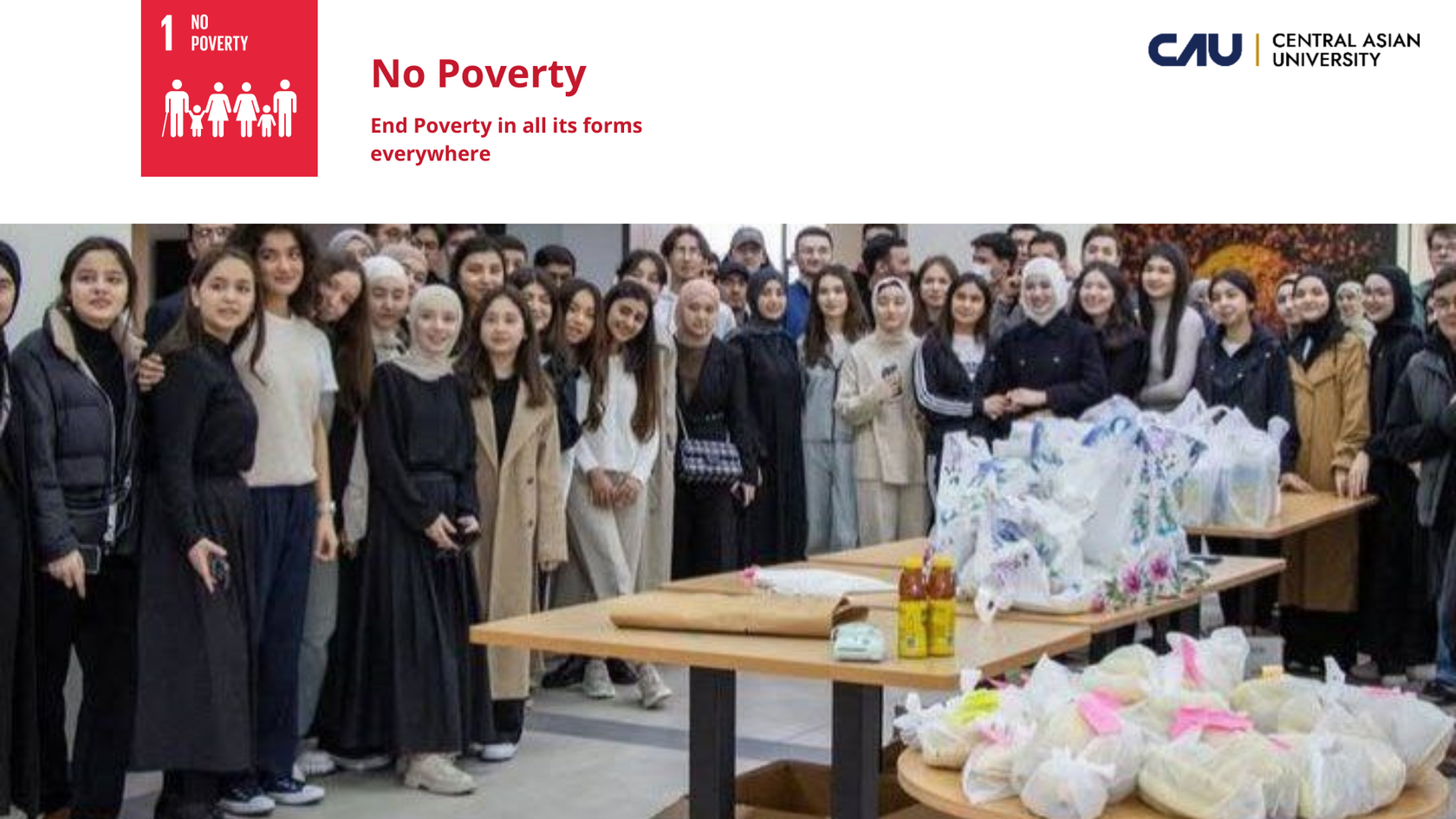
Each year, CAU students organize donation campaigns to provide essential goods, food supplies, and hygiene products to low-income families. These campaigns respond directly to immediate community needs, ensuring that basic living conditions can be improved for families facing financial challenges. Through such actions, students learn the importance of solidarity and community engagement as key values of sustainable development.
Each year, CAU students organize donation campaigns to provide essential goods, food supplies, and hygiene products to low-income families. These campaigns respond directly to immediate community needs, ensuring that basic living conditions can be improved for families facing financial challenges. Through such actions, students learn the importance of solidarity and community engagement as key values of sustainable development.
The University also regularly supports Mehr va Sahovat Uyi, a care home for elderly individuals who have no families or have been abandoned. CAU students visit the residents, prepare and share traditional meals such as pavlov, bring small gifts, and spend time engaging in conversation and companionship. These visits provide emotional comfort and help restore a sense of belonging for older citizens who often face isolation.
Another aspect of CAU’s social inclusion efforts is its work with Bolalar Uyi, a home for children without parents. Students visit the center to distribute gifts, toys, clothing, and educational materials. They organize games and creative activities that bring joy and confidence to children who have faced difficult beginnings. Such initiatives embody CAU’s belief that education extends beyond the classroom and that compassion and shared humanity are integral to social progress.
CAU students also engage in street-level outreach programs, distributing bottled water, prepared meals, and basic necessities to individuals experiencing homelessness or severe hardship. These efforts reflect the University’s belief that small, consistent acts of kindness contribute meaningfully to reducing the visible and invisible effects of poverty in society.
In addition to year-round initiatives, CAU upholds traditions of generosity and inclusion through its Ramadan Iftar program. Every year during the holy month of Ramadan, the University provides free Iftar meals for students, staff, and community members. This initiative emphasizes the values of sharing, compassion, and unity. It also ensures that individuals who may face financial challenges during this period are supported with dignity and respect. The Iftar gatherings serve as a meaningful example of CAU’s dedication to caring for its community, reinforcing cultural traditions while promoting social welfare.
Health is a critical factor in addressing poverty, and CAU supports this connection through its partnership with AKFA Medline University Hospital and the AKFA Medline Social Project. This initiative represents a new model of socially responsible healthcare in Uzbekistan, designed to provide free, accessible, and technologically advanced medical care to citizens in need. The facility, located in the Alfraganus residential complex in Tashkent, covers 35,300 m² and is equipped to serve up to 3,000 patients daily, or approximately 500,000 people per year. The hospital offers over 36 medical specialties, employs more than 300 healthcare professionals, and operates with full digitalization online registration, electronic medical records, and mobile access. By offering free preventive and diagnostic care, the AKFA Medline Social Project reduces health-related poverty and ensures that vulnerable populations can access essential services without financial burden.
CAU’s Rector, Kamran Gulamov, has emphasized that the University’s mission extends beyond education to include social responsibility: “Our goal is to provide these services to everyone, focusing on prevention and early diagnosis.” Through this initiative, CAU directly addresses the structural links between poverty and health inequality, reinforcing the University’s holistic approach to sustainable development.
Through its research, outreach, and partnerships, Central Asian University demonstrates that poverty alleviation is best achieved through a balance of knowledge, compassion, and action. CAU’s academic innovation, community engagement, and social responsibility projects together contribute to building a more inclusive society one where every individual can live with dignity, opportunity, and hope.
Through its research, outreach, and partnerships, Central Asian University demonstrates that poverty alleviation is best achieved through a balance of knowledge, compassion, and action. CAU’s academic innovation, community engagement, and social responsibility projects together contribute to building a more inclusive society one where every individual can live with dignity, opportunity, and hope.
No Poverty - SDG 1
1.1.1 - Contribution to Poverty Reduction through Education and Community Engagement
CAU’s Commitment to Poverty Alleviation
Central Asian University is committed to reducing poverty through education, research, and community initiatives, in alignment with the United Nations Sustainable Development Goal 1 - No Poverty. The University recognizes poverty as a multidimensional issue involving limited access to education, healthcare, and opportunities.
CAU promotes social responsibility across its academic and community programs, empowering students and staff to contribute toward inclusive growth and sustainable development.
CAU’s Commitment to Poverty Alleviation
Central Asian University is committed to reducing poverty through education, research, and community initiatives, in alignment with the United Nations Sustainable Development Goal 1 - No Poverty. The University recognizes poverty as a multidimensional issue involving limited access to education, healthcare, and opportunities.
CAU promotes social responsibility across its academic and community programs, empowering students and staff to contribute toward inclusive growth and sustainable development.
1.2.1 - Research and Innovation for Poverty Reduction
Research-Based Approaches to Social Equity
CAU researchers develop innovative methods to assess and address poverty beyond income-based measures. Studies such as “Measuring Non-Monetary Poverty via Machine Learning and Neutrosophic Method” apply artificial intelligence and data-driven models to identify social inequalities and guide fair policy decisions.
These initiatives strengthen CAU’s contribution to SDG 1 (No Poverty) and SDG 10 (Reduced Inequalities) through evidence-based and inclusive solutions.
Research-Based Approaches to Social Equity
CAU researchers develop innovative methods to assess and address poverty beyond income-based measures. Studies such as “Measuring Non-Monetary Poverty via Machine Learning and Neutrosophic Method” apply artificial intelligence and data-driven models to identify social inequalities and guide fair policy decisions.
These initiatives strengthen CAU’s contribution to SDG 1 (No Poverty) and SDG 10 (Reduced Inequalities) through evidence-based and inclusive solutions.
1.3.1- Community and Social Outreach Programmes
Supporting Vulnerable Groups
CAU organizes donation and volunteering campaigns to assist low-income families, elderly care homes (Mehr va Sahovat Uyi), and children’s centers (Bolalar Uyi). Students and staff contribute essential goods, food, and educational materials, fostering empathy and civic responsibility.
CAU students also participate in outreach programs distributing meals and necessities to those in need, reflecting the University’s values of compassion and solidarity.
Supporting Vulnerable Groups
CAU organizes donation and volunteering campaigns to assist low-income families, elderly care homes (Mehr va Sahovat Uyi), and children’s centers (Bolalar Uyi). Students and staff contribute essential goods, food, and educational materials, fostering empathy and civic responsibility.
CAU students also participate in outreach programs distributing meals and necessities to those in need, reflecting the University’s values of compassion and solidarity.
1.4.1 - Inclusive Cultural and Social Support Activities
Ramadan Iftar and Campus Solidarity
Each year, CAU hosts a free Ramadan Iftar program for students, staff, and community members. This initiative promotes unity, generosity, and inclusion- supporting individuals who may face financial challenges and reinforcing CAU’s dedication to community welfare. Through these integrated efforts in research, education, and social engagement, Central Asian University continues to advance the goals of SDG 1 – No Poverty, contributing to a more equitable and compassionate society.
Ramadan Iftar and Campus Solidarity
Each year, CAU hosts a free Ramadan Iftar program for students, staff, and community members. This initiative promotes unity, generosity, and inclusion- supporting individuals who may face financial challenges and reinforcing CAU’s dedication to community welfare. Through these integrated efforts in research, education, and social engagement, Central Asian University continues to advance the goals of SDG 1 – No Poverty, contributing to a more equitable and compassionate society.